Vertical Garden Systems Compared: A Decision Guide
The right vertical garden system comes down to two questions, not a ranked list of “best” structures: can you drill into the surface you are working with, and is the weight going onto a wall, or onto a floor or railing? Answer those two questions first, and the structure choice mostly picks itself.
If you cannot drill, look at freestanding towers, railing-mounted planters, or tension-rod systems. If you have wall access and a plan to protect the wall behind it, fabric pocket panels and modular panels become options. Trellises, tiered shelving, and hydroponic towers each answer a more specific need on top of that. Here is how each category actually compares, criteria by criteria.
The Real Decision: Your Wall, Your Lease, and Where the Weight Goes
Most vertical gardening articles list five or six structure types side by side and leave you to guess which one fits. That is backward. Before you compare features, answer two questions about your own space:
- Can you drill into the wall, or does your lease, your landlord, or your own preference rule that out?
- When a structure is loaded with wet soil, does that weight land on a wall anchor, or on a floor and a railing?
Everything below is organized around those two questions rather than around which system looks nicest in a photo. For the full build sequence, including how to check what your specific wall or floor can carry before you buy anything, see our step-by-step guide on how to build a vertical garden for a small space.
Renter-safe, No-drill Options
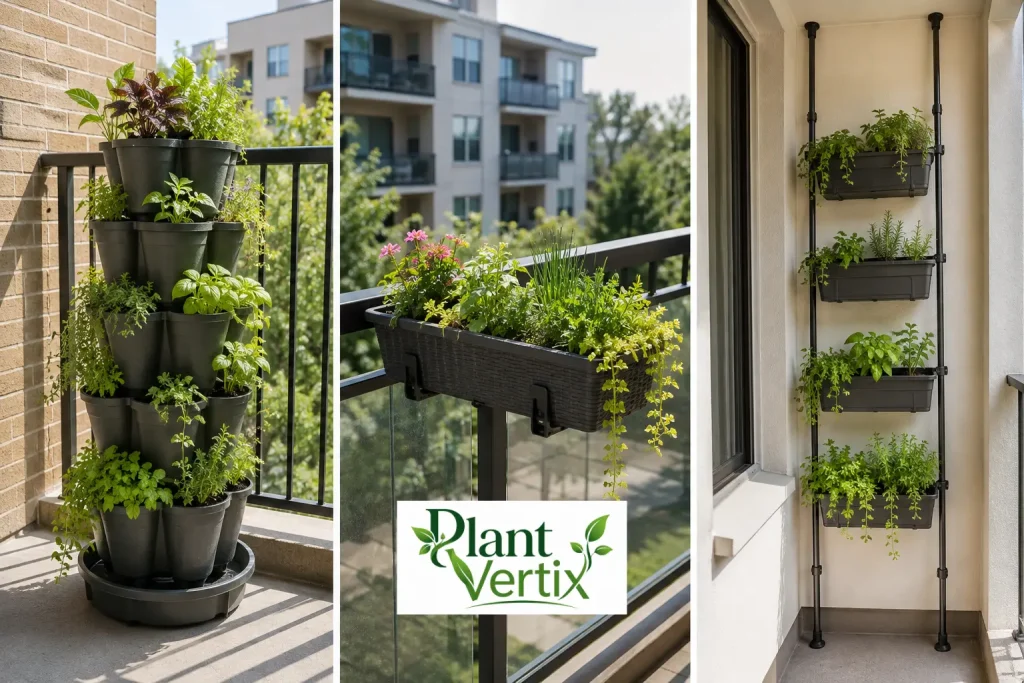
If drilling is off the table, three categories cover almost every case.
Freestanding towers stack several tiers on a base that stands on the floor. No wall contact is required at all, which makes them the simplest no-drill option and the easiest to move if you relocate. The trade-off is a genuine floor footprint and a base that needs to sit on level, stable ground.
Railing-mounted or clamp-on structures attach to a balcony or deck railing with brackets or clamps rather than screws into a wall. The weight here transfers to the railing, not to drywall or siding, so the question to answer is the railing’s own rated capacity, not a wall anchor’s.
Tension-rod systems wedge into place using spring pressure between two surfaces, the same principle as a shower-curtain rod. No holes, no patching. They are best suited to light loads such as herbs or trailing houseplants, since a tension rod is not rated for the kind of weight a properly anchored bracket can carry.
All three leave the wall untouched, which is exactly why they are the default recommendation for renters.
Mounted Wall Systems: Fabric Pocket Panels vs. Modular Panels
If you do have wall access, the two common mounted formats behave differently.
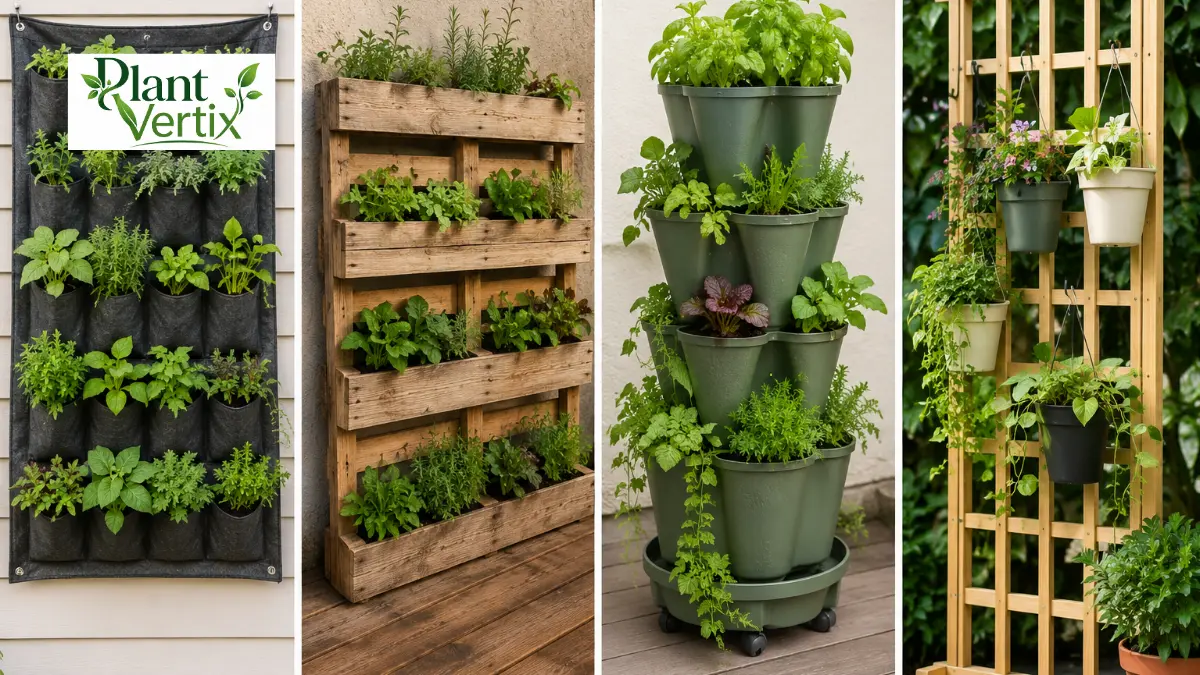
Fabric pocket panels are a hanging backing with individual soil-filled pockets sewn into it. Dry, the panel is light. Loaded with damp soil across a dozen or more pockets, the combined wet weight is considerably more than it looks on the shelf. Water also moves downward through the fabric, so lower pockets stay wetter by default, a pattern covered in more detail in our guide to watering a vertical garden.
Modular panels are rigid trays or interlocking cells, generally heavier per square foot than fabric because they hold more soil volume and a more substantial frame.
Either way, the anchor holding the system needs to be rated for the wet, loaded weight, not the empty weight. Anchor types differ widely in what they carry, and a properly located wall stud generally holds more than any drywall-only anchor.
Read the rated capacity printed on the anchor’s own packaging rather than working from a general figure, and size the system by its fully loaded weight (soil plus water plus mature plants, never the empty structure). Treat that printed rating as a ceiling to stay well under, not a target to plan up to. For older or plaster walls, ask a hardware store or a qualified local contractor before committing to a fully loaded panel.
This is also where plant selection and structure choice meet. A mature, heavy plant with a large root ball generally does not belong in an unsupported hanging pocket. If you are still deciding what to grow, our guide to matching plants to tier position by weight and light covers which plants are safe for a hanging wall system and which ones need a floor-supported tier instead.
Trellis and Climbing Frames: When the Structure Matters More Than the Container
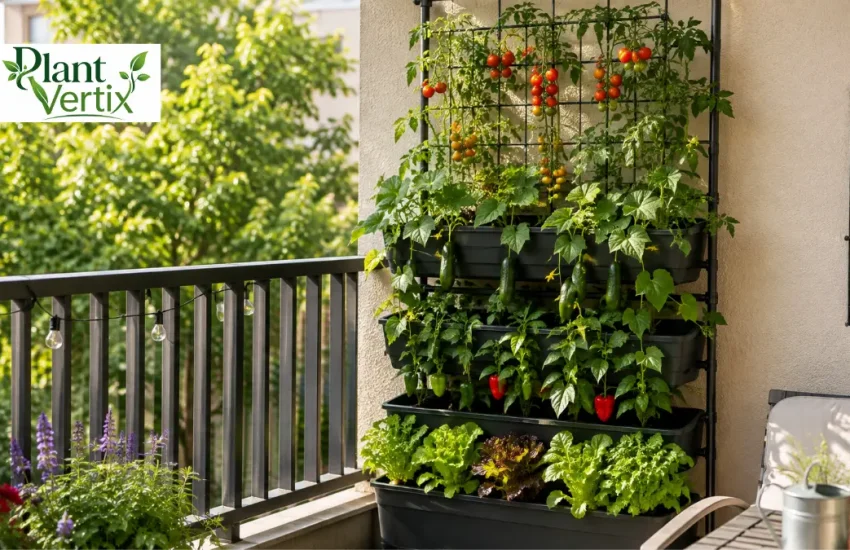
A trellis works on a different principle than a panel or a pocket. One planted root zone, usually in a single container or bed at the base, sends vines or tendrils up a frame. The container itself stays modest, but a well-supported trellis can let that one root zone’s growth cover considerably more vertical surface than its own footprint would suggest, which is the whole appeal for a small space.
A trellis frame can be freestanding (braced against a wall or fence without touching it) or wall-anchored (screwed or bolted directly into it). If you choose the wall-anchored version, the same anchor-rating caution from the section above applies. Trellises suit vining plants (peas, beans, cucumbers, morning glory, and similar climbers) better than they suit bushy or shallow-rooted plants, since the whole system depends on the plant actually climbing rather than sitting in a pocket.
Tiered or Ladder Shelving: Floor-load, not Wall-load
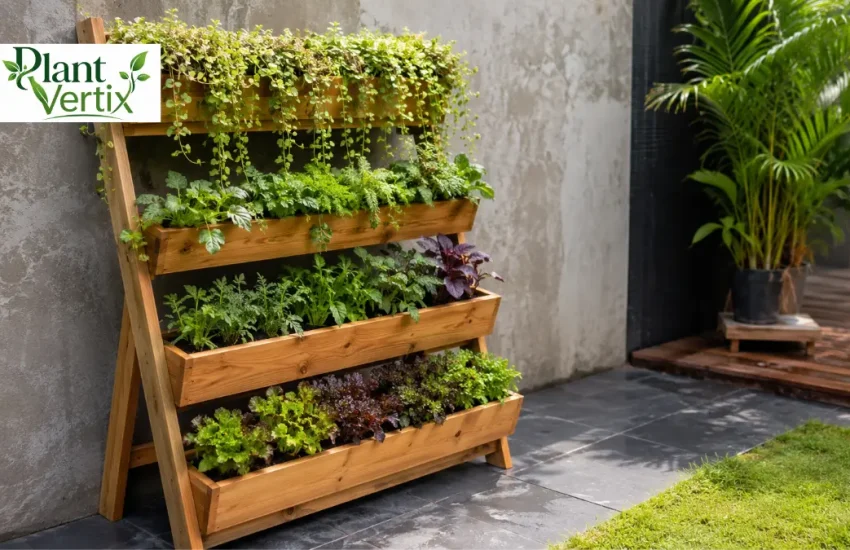
Tiered shelving, repurposed ladder shelves, and stair-step plant stands put the weight on the floor or a railing, not on a wall anchor. On solid ground, floor load is rarely a concern for a home vertical garden. On an elevated balcony or deck, the floor and the railing are both rated by the building for a maximum load, the same way a wall anchor is rated. A heavily loaded tiered unit full of wet soil is real weight on that structure, even though nothing is drilled into anything.
This is the category most likely to feel automatically safe simply because nothing is attached to a wall. It is not automatically safe. If you are on an upper-floor balcony, confirm the floor and railing’s rated load with your building management before adding a fully loaded, multi-tier unit, the same way you would confirm a wall anchor’s rating before mounting a panel.
Hydroponic Vertical Towers, Briefly
A hydroponic tower replaces soil with a recirculating nutrient solution. A small electric pump moves water mixed with dissolved nutrients to the top of the tower, where it trickles down through a stack of plant baskets and returns to a reservoir at the base, in a continuous loop. Plant roots sit in that moving stream instead of in soil.
The honest trade-off: less overall weight (no soil mass) and often a smaller footprint, in exchange for added complexity. A pump needs power and occasional upkeep, and a nutrient solution needs mixing and monitoring rather than simple watering. If you are already learning drainage and plant fit on a soil-based system for the first time, adding a pump and nutrient chemistry on top is optional, not required, for a first vertical garden. It is worth it once you specifically want less weight and faster growth and are comfortable managing the extra moving parts.
Vertical Garden Systems Compared: A Simple Decision Checklist
| Question | If yes | If no |
|---|---|---|
| Can you drill into the wall? | Fabric pocket panel, modular panel, or wall-anchored trellis | Freestanding tower, railing-mounted planter, or tension-rod system |
| Is the weight going onto a wall? | Confirm the anchor’s rated capacity for the loaded, wet weight | Confirm the floor’s or railing’s rated load with building management |
| Do you want soil or a nutrient solution? | Hydroponic tower, once you are ready for the added complexity | A soil-based system, generally simpler for a first attempt |
| Are you renting? | Favor reversible, no-drill options first | Wall-anchored options are open to you, with the same rating checks above |
FAQ
Do I need drainage holes in every pocket of a wall-mounted system?
In practice, yes. Without drainage, water pools in the soil and against the wall behind it, which is how a wall-mounted system damages the surface it is attached to. Most fabric and modular systems need a way for excess water to drain, plus a barrier between the panel and the wall itself, covered in more depth in our guide to watering a vertical garden.
Can a wall-mounted vertical garden be removed later without damaging the wall?
It depends on the anchor. Anchors that go into a stud, or heavy-duty drywall anchors, leave a small hole that is easy to patch. A genuinely no-drill option, such as a tension rod, a railing clamp, or a freestanding tower, leaves no wall damage at all. That is the main reason renters are usually better off defaulting to a no-drill category first, rather than a mounted one.
What is the difference between a “living wall” and a vertical planter?
The term “living wall” is used loosely, but it usually refers to a denser modular panel system meant to visually read as a solid wall of greenery. “Vertical planter” is the broader term, covering any structure, including pocket panels, towers, and trellises, that grows plants vertically rather than in a single ground-level pot. In practice, the same mechanics (wall load, drainage, plant fit) apply regardless of which marketing term is used.
Is a hydroponic tower worth the added complexity for a beginner?
Not required, and not always the better first choice. A soil-based system is generally more forgiving while you are still learning drainage and plant fit. A hydroponic tower is worth considering once you specifically want its trade-off, less weight and often faster growth, in exchange for managing a pump and a nutrient solution instead of simply watering.
How do I find out what my wall or floor can actually support?
Check the rated capacity printed on the wall anchor’s own packaging, and mount into a stud where you can, since a stud generally holds more than a drywall-only anchor. For a balcony, deck, or elevated floor, ask building management or a local contractor for the structure’s rated load rather than assuming a number. This same check is step one of our full build guide for a small-space vertical garden.