Vertical Vegetable Gardening in Containers: What Works
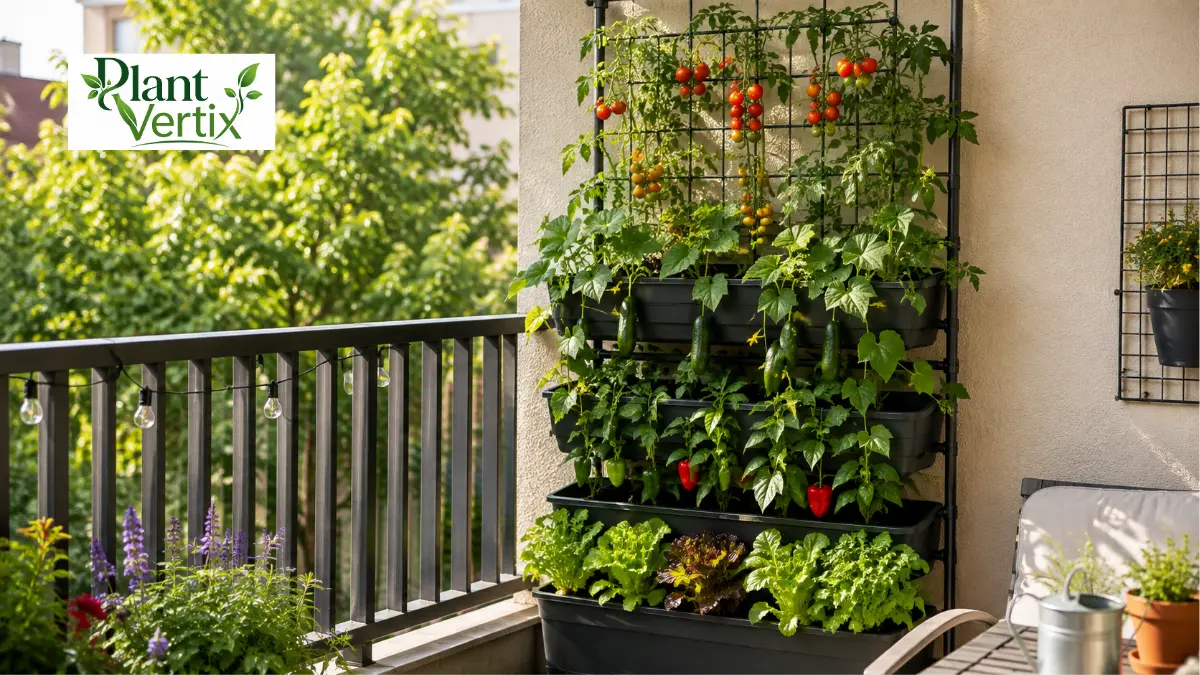
Yes, you can grow real, harvestable vegetables vertically in a small space, not just herbs or succulents. Pole beans, peas, cucumbers, small-fruited tomatoes, and melons all train onto a trellis or cage, and vertical training tends to improve yield per square foot rather than reduce it, mainly because leaves get better light exposure and airflow around the foliage improves, which lowers disease pressure and makes harvesting easier.
The catch: most trellis advice online assumes an in-ground bed. A pot on a balcony or patio has no soil to stake a post into, so anchoring works differently, and that is the part this guide covers.
Yes, Vertical Vegetable Gardening Can Produce a Real Harvest
The skepticism is fair. A lot of “vertical gardening” content online is really about pothos on a shelf or succulents in a wall pocket, not food. But the same vining vegetables that get staked in a backyard garden bed climb just as well out of a container, as long as the container has enough root volume and the support is anchored well.
The mechanics are simple. A vine trained upward spreads its leaves along a vertical plane instead of piling them on top of each other at ground level, so more of the plant’s leaf surface actually catches direct sun.
Fruit hangs in the open air instead of resting on damp soil, which keeps it cleaner and easier to spot at harvest time. None of this is a guarantee of a bigger harvest in every setup; light, water consistency, and plant health still do most of the work. But extension-level guidance is consistent that vertical training is a genuine yield and disease-reduction strategy, not just a space trick.
Vegetables to Grow Vertically in a Container
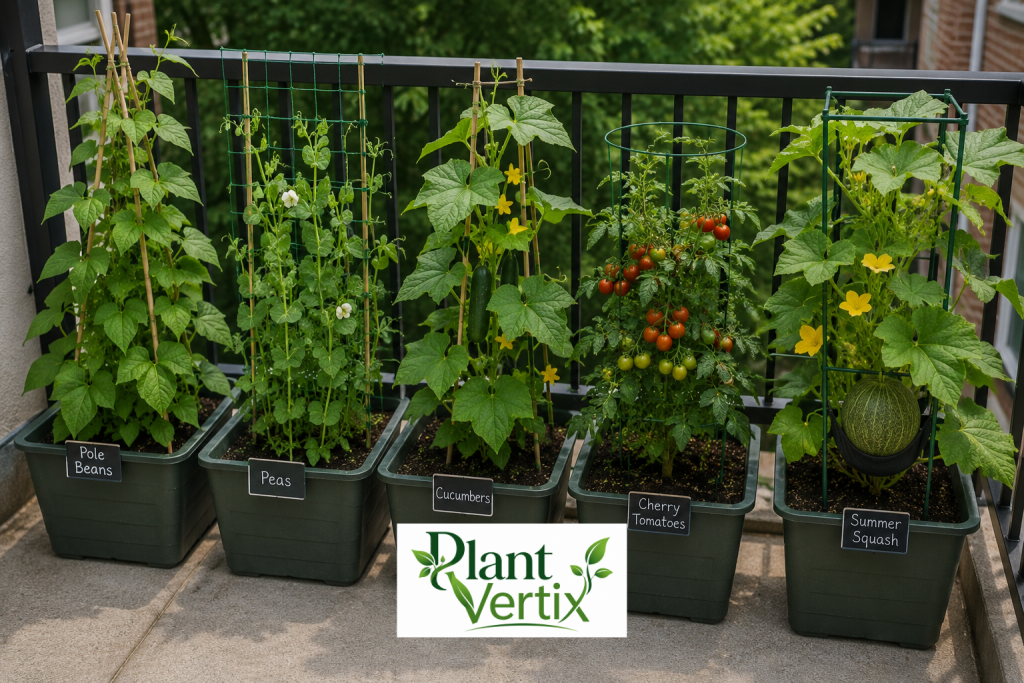
Not every vegetable is a good trellis candidate, and matching the right crop to a vertical setup matters more in a container than it does in open ground, since a pot gives a plant less room to compensate for a bad fit. The vegetables that consistently work well as trellis vegetables in a small garden or on a balcony:
- Pole beans. Naturally climbing, lightweight on the vine, and one of the easiest vertical vegetables for a first attempt.
- Peas. Shallow-rooted and light, so they climb well on even a modest trellis or netting.
- Cucumbers. Produce tendrils that grip string, wire, or netting on their own with very little training needed.
- Small-fruited or determinate tomatoes. Compact and cherry or grape varieties are easier to support on a container trellis than large, sprawling indeterminate types.
- Melons and compact summer squash. Workable with a genuinely sturdy structure, though heavier fruit needs extra support (more on that below).
Root vegetables and anything grown for its below-ground part are not on this list on purpose. There is no vine to train, so a trellis adds nothing.
Container Depth and Root Space, by Vegetable
This is where most in-ground trellis advice quietly stops applying. A vegetable that does fine staked into six feet of native soil does not automatically have enough root room in a 12-inch pot. These are general, commonly cited ranges, not a guarantee for every cultivar; check the specific variety’s tag and size up when in doubt.
| Vegetable | Typical minimum depth | Notes |
|---|---|---|
| Tomatoes (determinate/small-fruited) | About 12 to 18 inches | A roughly 5-gallon container is a common minimum |
| Tomatoes (indeterminate/vining) | Deeper and wider | Often 10 to 15 gallons, since a tall trellis needs a bigger root system to support it |
| Cucumbers | About 12 to 18 inches | A roughly 12-inch-diameter, 5-gallon container is a frequently cited minimum for a trellised vine |
| Pole beans | About 12 inches | A trellis or netting is needed from the start |
| Peas | About 8 to 12 inches | Shallow-rooted; a wide container for several plants matters more than extra depth |
| Squash on a trellis | 18 inches or more | Often cited around 18 to 20 gallons, plus a heavy-duty support |
Width matters as much as depth for shallow-rooted crops like peas. A wide, shallow container growing several plants side by side can out-produce a single deep, narrow pot.
Anchoring a Trellis or Cage Inside a Container
Standard extension guidance for an in-ground vegetable trellis calls for driving posts 18 to 24 inches into the soil. A container obviously has no ground to sink a post into, and this gap is where most casual “grow vegetables vertically” advice quietly stops being useful. A few approaches actually work in a pot:
- Choose a trellis or cage with its own wide base or built-in feet, so it stands on its own footprint rather than depending on soil depth for stability.
- Weigh the container down at the base. A layer of gravel at the bottom of a tall planter, or setting the pot inside a slightly larger, heavier outer container, adds ballast against wind and top-heavy vine growth.
- Brace the trellis against an existing railing, wall, or fence with clips or brackets, so the structure’s weight is carried independently of the container itself. This is the more reliable option for a taller trellis or a heavy fruit load, and it is exactly the kind of no-drill versus mounted decision covered in full in Vertical Garden Wall Planter Systems Compared.
- Use a self-standing shape, like a tripod or teepee frame, instead of a single stake. Three or four legs spread the load and do not rely on being driven into anything.
Whichever method is used, test stability before the vine gets heavy. A trellis that wobbles empty will not hold up once fruit adds weight to one side.
Spacing and Training Vines as They Grow
Give each plant room at its base so foliage does not crowd out light and airflow lower on the vine, even though the whole point of training upward is to save floor space. As vines grow, guide them onto the support with soft ties or clips rather than letting them grab whatever is nearest; a tendril reaching away from the trellis will happily climb a neighboring plant, a railing, or a downspout if it is not redirected.
Once fruit starts to size up on a heavier crop like a melon or a squash, a soft sling made from a reused piece of fabric or a mesh produce bag, tied to the trellis, keeps the vine from tearing under the fruit’s weight. This is standard practice on in-ground trellises for exactly the same reason it matters in a container: the vine, not the pot, is what fails first if a heavy fruit is left unsupported.
What Does Not Work Well Vertically in a Small Container
Two categories consistently disappoint:
- Root crops. Carrots, beets, potatoes, and onions have nothing above ground to train onto a trellis. Vertical structure does nothing for them; they belong in a plain container, not this setup.
- Sprawling squash without real support. Compact summer squash can be trained up a sturdy trellis with slings for the fruit. Large-fruited winter squash, like butternut or turban types, get heavy fast, and without a genuinely sturdy structure and slings added early, the vine or the trellis itself can fail partway through the season. If a container and support cannot handle that weight, a bush-type or smaller-fruited variety is the more realistic choice for a small space.
For a fuller breakdown of which vining vegetables fit which tier of a stacked or tiered structure by weight and light exposure, see Best Plants for Vertical Gardening.
Harvest and Disease Benefits, Explained Plainly
Three things tend to improve with vertical training, and each has a straightforward mechanical reason behind it:
- Airflow. Leaves spread along a vertical plane, rather than piled on the ground, get more air movement around them, which extension guidance consistently links to reduced fungal and bacterial disease pressure.
- Harvest ease and fruit quality. Fruit hanging in the open is easier to spot, easier to reach, and stays cleaner than fruit resting on soil.
- Yield per square foot of floor space. A trained vine uses far less horizontal footprint than the same plant sprawling on the ground, which is the whole appeal of vertical vegetable gardening in a small space. Actual harvest size still depends on light, water, and the plant’s overall health, so “yield tends to improve” is the honest claim, not a guarantee for every setup.
If this is the first structure being built rather than an addition to an existing one, How to Build a Vertical Garden for a Small Space walks through the full sequence, from checking what a wall or balcony can carry through picking a structure and setting up a watering routine.
FAQ
Do vegetables grown vertically taste different or yield less than in-ground?
No. Taste and nutrition come from the variety, soil, water, and sun the plant gets, not from growing up instead of out. Yield tends to hold steady or improve with vertical training, due to better light exposure and airflow, rather than decrease.
What is the minimum container depth for tomatoes grown on a trellis?
Compact, determinate, or small-fruited tomatoes generally need about 12 to 18 inches of depth, often in a roughly 5-gallon container. Larger, indeterminate vining types need more root volume, commonly 10 to 15 gallons, since they support a taller trellis over a longer season.
Can squash actually be grown vertically in a small pot?
Compact summer squash varieties can, with a large container (often 18 inches deep or more) and a genuinely sturdy trellis. Large-fruited winter squash gets heavy quickly and typically needs fruit slings and a heavier-duty structure to succeed vertically; it is a poor fit for a truly small setup without that extra support.
Do I need a cage or a trellis for cucumbers?
Either works. Cucumbers produce tendrils that grip string, wire, or netting with little training, so a simple trellis or netting panel is usually enough. A cage works too and can be easier to anchor inside a container that has no ground to stake into.
Can I use a vegetable trellis on a balcony without drilling into anything?
Yes, several no-drill options exist, including freestanding, self-supporting frames and structures that brace against an existing railing rather than a wall. The full decision framework for renter-safe versus mounted systems is covered in Vertical Garden Wall Planter Systems Compared.