Catch Trays, Drip Pans and Protecting the Floor Underneath
“What is going to happen to my floorboards?” is a reasonable question, and the answer is usually nothing, provided one decision is made properly and two others are not overlooked.
The decision is the tray. The two overlooked things are the reason a floor can be damaged without a single drop ever spilling.
The Tray, Sized From Your Own System
Most advice tells you to put a tray under it. Almost none tells you how big, which is the only part that matters.
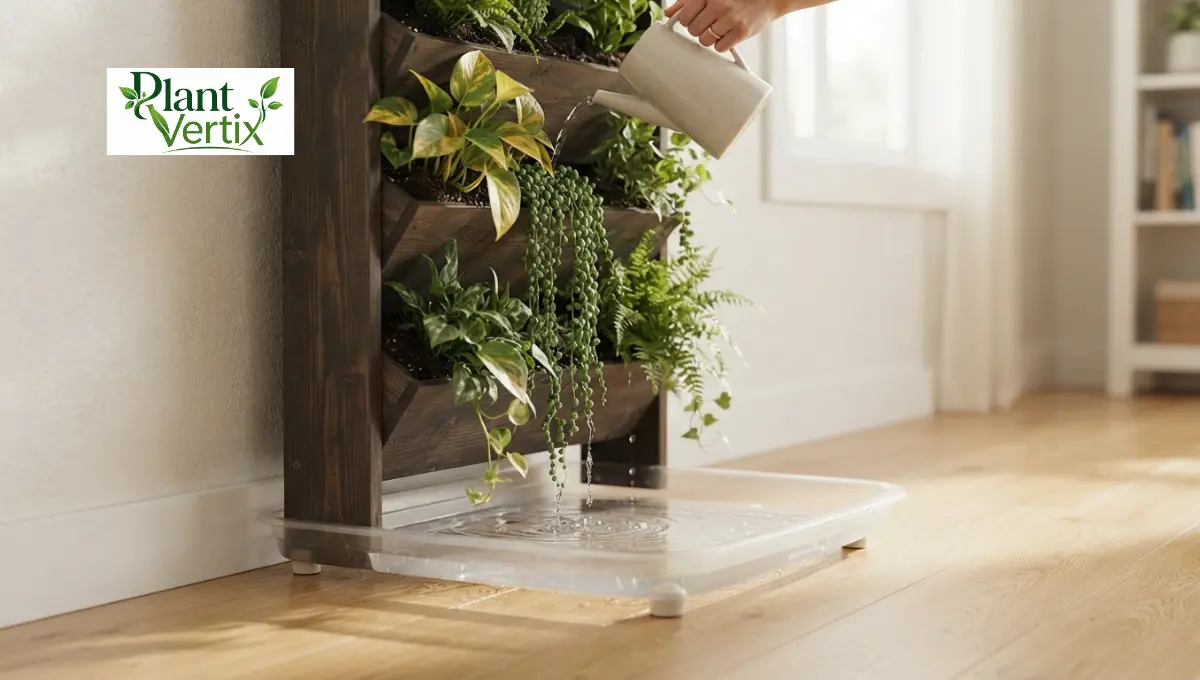
Measure your runoff once. Put a container under the outlet and water the system exactly as you normally would. What collects is the volume your tray has to hold, from your medium, at your watering.
That is a five-minute measurement, and it replaces every published guess. Where that runoff is going in the first place is covered separately on this site.
Then size up. A tray that exactly holds a normal watering has no margin for the day you over-water, for rain if the system is outdoors, or for the fact that you will not empty it every time.
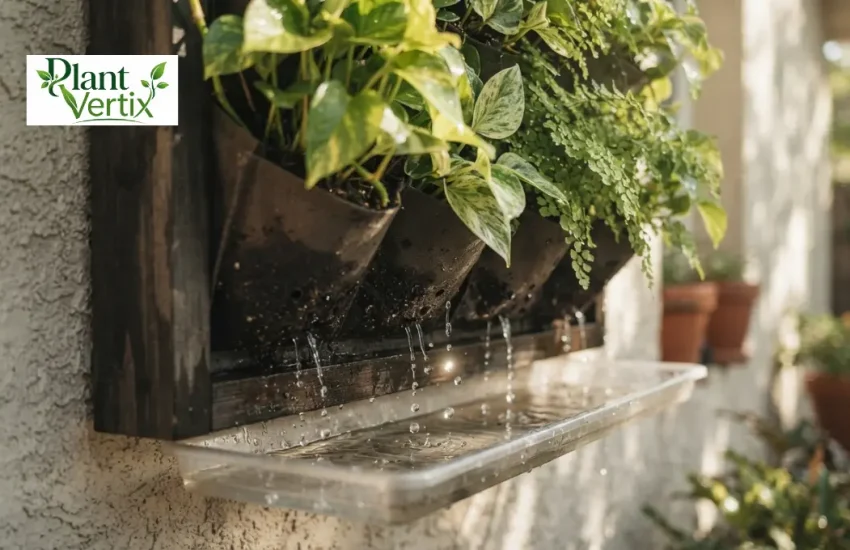
And check the footprint, not just the volume. A tray has to catch drips from the whole width of the system, including the edges, and water does not fall in a neat column. A tray narrower than the structure above it catches most of the water and leaves the rest on the floor, which is the worst of both arrangements because it looks solved.
Three Things a Tray Has to be
Big enough to hold more than a full watering, as above.
Easy to empty. A tray you have to dismantle the system to reach will not be emptied, and a tray standing full permanently is a different problem from an overflow. This is a design constraint, and it decides where the tray goes as much as its size does.
Stable and level. A tray on an uneven floor holds water at one end and spills at the other, and a heavy tray full of water that gets knocked is a bigger event than the drips it was catching.
The Two Failures That Happen Without a Spill
Here is the part the standard advice misses, and it is where floors actually get damaged.
1. Standing water under the tray
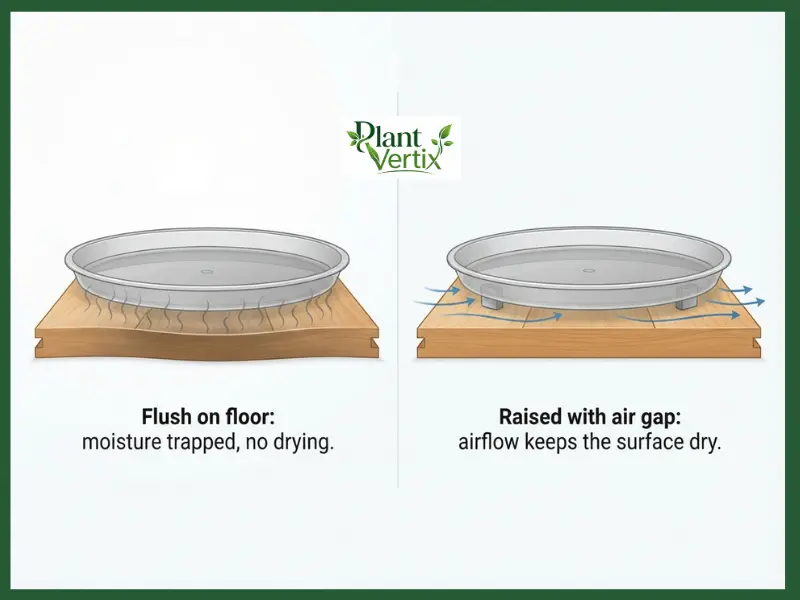
A tray sitting flat on a floor traps moisture between itself and the surface. Condensation forms, nothing dries, and over months a wooden floor darkens, a laminate swells at the joints, and a carpet under it never dries.
The tray was never overtopped. The damage came from a permanently damp interface.
The fix is an air gap. Feet, a stand, a rack, or anything that lets air move underneath. This is the same principle as the air gap behind a mounted system, which our article on protecting the wall covers, and it exists for exactly the same reason.
2. Humidity, without any liquid at all
A planted system releases moisture continuously. Indoors, in a room with limited air movement, that raises the humidity in the immediate area, and the effects show up on the surfaces closest to it: the floor beneath, the wall behind, and skirting or baseboard.
This is slower, and it is the one that surprises people, because there is no event to point at. Air movement is the answer: not sealing the area, but letting it breathe.
Matching the Protection to the Floor
Different floors fail differently, and it is worth knowing which failure you are protecting against.
Wood and engineered wood. Marks, staining and, with prolonged exposure, movement in the boards. The most sensitive of the common floors and the least forgiving of a slow leak.
Laminate. Swells at the joints where water gets in, and swelling is permanent. Standing water is the enemy rather than humidity.
Carpet. Does not show a problem until it smells. A permanently damp patch under a tray is the classic case, and it is the one most likely to be discovered at a move-out inspection.
Vinyl and tile. The most tolerant. Water can still get to the subfloor through a seam or a grout line, and a tiled floor with a persistent puddle on it is a slip hazard, whatever the tile thinks about it.
Concrete or a balcony surface. Generally fine, with two caveats: standing water stains and can encourage growth, and outdoors it freezes.
The Indoor and Outdoor Cases Are Different Projects
Indoors, the tray is the whole system, and it has to be emptied by a person. There is no other route for the water and nothing evaporates fast enough to matter.
Outdoors, rain is a variable you do not control, and a tray that is adequate for your watering can be overwhelmed by weather. The usual outdoor answer is to let it drain away rather than to catch it, which works when there is somewhere for it to go and does not on a balcony.
On a balcony, water leaving the edge becomes a question about the flat below, and that is a subject this site leaves to a sibling rather than answering here. It is worth settling before you build.
Where to Put the Tray in the Design, Which is at the Start
A tray added afterwards is nearly always the wrong size and in the wrong place, because the structure was built without a space for it.
Decide the catch point when you decide the structure. Where does every tier’s water end up, is there room under it for something with real capacity, and can a person get to that thing with a jug.
A freestanding system makes this much easier than a mounted one, because the base is already there and there is nothing above the floor you cannot reach. That is one more entry on the list of practical reasons a freestanding structure is the simpler project, alongside the ones in our guide to tiered plant shelves.
FAQ
How big should a drip tray for a vertical planter be?
Big enough to hold more than a full watering, and this page gives no capacity because the right one comes from your own system rather than from a published guess. Measure it once: put a container under the outlet, water exactly as you normally would, and what collects is the volume the tray has to hold from your medium at your watering. Then size up, because a tray that exactly holds a normal watering has no margin for the day you over-water, for rain outdoors, or for the times you do not empty it. Check the footprint as well as the volume, since water does not fall in a neat column and a tray narrower than the structure above it leaves the edges on the floor while looking solved.
Can I stand the tray directly on the floor?
Better not to, because that is one of the two ways a floor gets damaged without anything ever spilling. A tray sitting flat traps moisture between itself and the surface; condensation forms, nothing dries, and over months a wooden floor darkens, a laminate swells at the joints and a carpet underneath never dries. Give it an air gap instead: feet, a stand, a rack, anything that lets air move underneath. It is the same principle as the air gap behind a mounted system and it exists for the same reason.
Which floors are most at risk under a vertical garden?
Wood and engineered wood are the most sensitive and the least forgiving of a slow leak, showing marks, staining and eventually movement in the boards. Laminate swells at the joints where water gets in and that swelling is permanent, so standing water rather than humidity is its enemy. Carpet gives no warning until it smells, and a permanently damp patch under a tray is the case most likely to be found at a move-out inspection. Vinyl and tile are the most tolerant, though water can still reach the subfloor through a seam or grout line and a persistent puddle is a slip hazard. Concrete and balcony surfaces are generally fine, except that standing water stains, can encourage growth, and freezes outdoors.
Do I need a tray for an outdoor vertical garden?
Outdoors is a different project, because rain is a variable you do not control, and a tray sized for your watering can be overwhelmed by weather. The usual outdoor answer is to let the water drain away rather than to catch it, which works where there is somewhere for it to go. On a balcony, there often is not, and water leaving the edge then becomes a question about the flat below, which this site leaves to a sibling rather than answering here. It is worth settling before you build.
Can a plant damage a floor without any water spilling?
Yes, and this is the failure that surprises people because there is no event to point at. A plant system releases moisture continuously, and indoors, in a room with limited air movement, that raises humidity in the immediate area. The effects turn up on the nearest surfaces: the floor beneath, the wall behind, and skirting or baseboard. The answer is air movement rather than sealing the area off, so let it breathe.
The Maintenance, Which is One Habit
Empty it when you water, every time. Not on a schedule, not when you remember. Attaching it to the watering routine is the only version that survives contact with a busy month.
Look under it once a month. Lift it, put a hand on the floor, and check that the surface under it is dry. That is the check that catches the slow failure before it becomes a floor.
And clean it. A tray of standing water with organic matter in it grows things, attracts insects, and smells, none of which is what anyone wanted from an indoor garden.
For where the tray fits into the wider set of decisions made before anything is planted, our vertical garden planning checklist is the place it belongs, alongside the drainage route and the wall barrier.