Vertical Garden Planning Checklist (Before You Buy)
Run this checklist in order, and the order is the point. Confirm what the surface is and what it can carry, then confirm sunlight and water access, then confirm you are allowed to do it, and only then choose a system and pick plants. Most vertical garden checklists start at “choose a sunny spot and pick a structure you like,” which means the reader buys the system before discovering that their wall is plasterboard, their balcony is rented, or the tap is thirty feet away. Every item below has a clear pass condition, and four of them are stop points: if you cannot pass them, you do not proceed; you get someone qualified to look.
Print it, work down it, and do not skip to the plant list.
Part 1 of the Vertical Garden Planning Checklist: The Surface and the Load
1. Identify what your wall or surface actually is
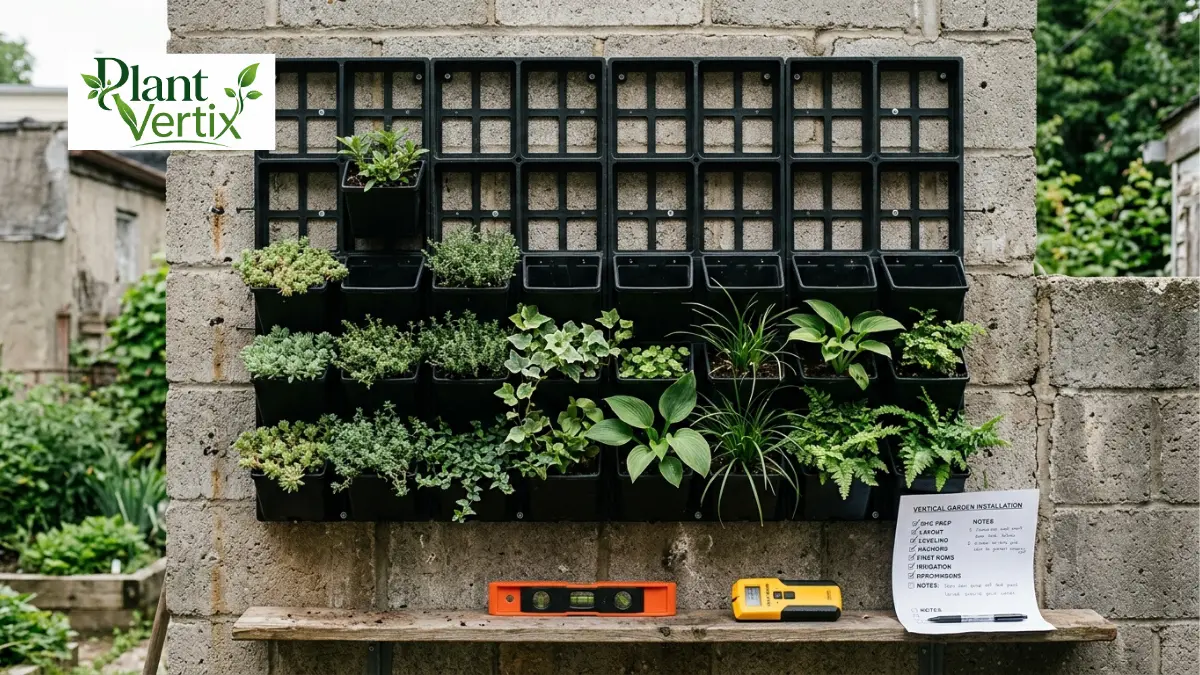
Not what it looks like. What is it made from? Tap it, look at an exposed edge, check where a screw has been before, look in a socket box, or ask your building manager. The realistic categories are: solid masonry (brick, block, concrete), plasterboard or drywall over a timber or metal frame, plaster over masonry, timber cladding or siding, render over something you cannot see, vinyl or composite panel, and metal or glass balustrade.
Pass condition: you can name the material with confidence and say what is behind it.
Why it is first: every later decision depends on it. The fixing is only as strong as what it goes into, and no fixing rescues the wrong substrate. Plain drywall is not a substrate for a loaded planter. In a stud wall, the load goes to the studs, or it does not go anywhere safe. In masonry, it goes to a masonry anchor matched to that masonry. In render, you cannot see what you are fixing to, which is why render is a stop point.
STOP if: the wall is rendered or clad and you cannot establish what is behind it, the wall has a cavity you cannot verify the construction of, the surface is hollow vinyl or composite, or the wall shows cracking, damp, crumbling mortar, or bulging. Those are professional questions, not gardening questions.
2. Weigh what you are about to hang, for real
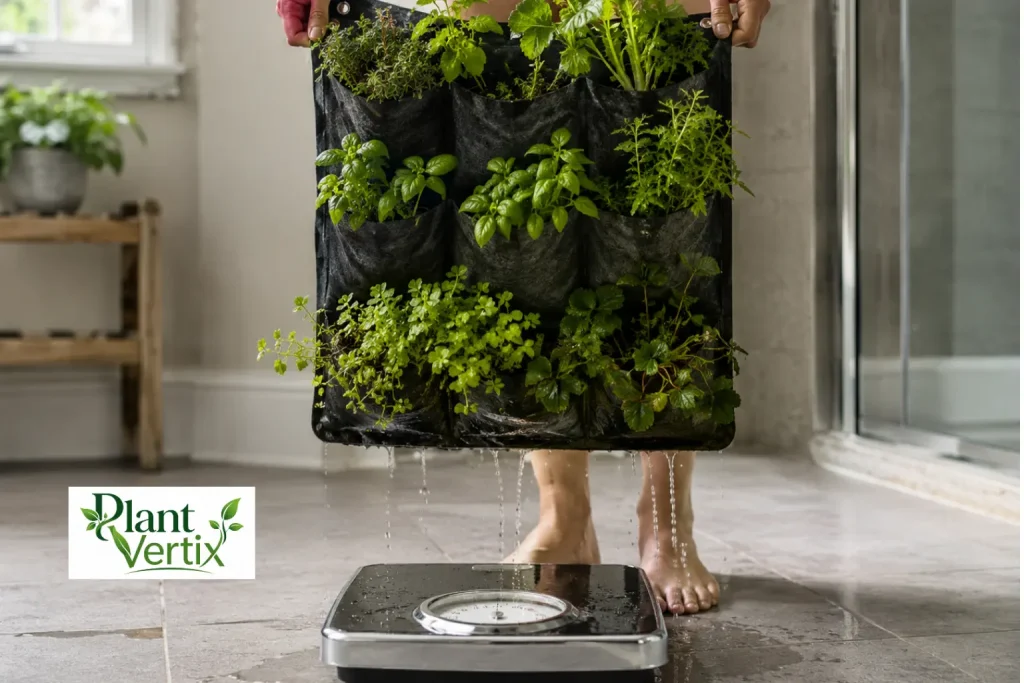
This is the item no other checklist gives you, and it takes twenty minutes.
Published weight figures are close to useless here, because they depend on which growing medium you use, how much of it, and how wet it is at the moment you ask. So do not look one up. Measure your own.
The protocol:
- Take one pocket, tray, module or tier of the exact system you intend to use, or a container of the same volume if you have not bought yet.
- Fill it with the growing medium you actually plan to use, planted or not.
- Water it until water runs freely out of the bottom, then let it drain for fifteen minutes. That is roughly its heaviest realistic state.
- Stand on a bathroom scale holding it, note the number, put it down, weigh yourself alone, and subtract.
- Multiply by the number of pockets, trays or tiers in your finished system.
- Add the weight of the frame or backing panel itself.
You now have a real saturated weight for your build, measured rather than borrowed. Two things about it are worth stating flatly:
- Water alone is heavy. A US gallon weighs about 8.34 pounds, and a liter weighs one kilogram. A system that holds several gallons of water at saturation is carrying that weight on top of everything else.
- That number is a load that changes. It rises every time you irrigate and falls as it dries, over and over, for years. Fixings behave differently under a cycling load than under a static one.
Pass condition: you have a measured saturated number written down before you buy fixings.
What we will not do: tell you whether that number is safe. This site publishes no safe-load figure, no anchor rating, and no balcony capacity number, because we cannot see your wall and a figure that is fine on one substrate is dangerous on another. Take your measured number to the fixing manufacturer’s own guidance for your specific wall type, or to a qualified professional. The rating printed on a fixing pack is for a static load in a tested material, and a watered planting system is neither.
STOP if: anything would hang over a walkway, a doorway, seating, a driveway, or anywhere a child or a pet plays. Get a professional. That is not caution for its own sake. It is the difference between a repair and an injury.
3. Decide whether the load goes to a wall or to the floor
There are only two answers and they lead to different builds. Wall and railing-mounted systems put the load into a structure through fixings. Freestanding towers, tiered shelves and braced frames put it on the floor, which moves the risk from pull-out to tipping over, especially on soft ground, in wind, or on a balcony where the floor load itself is a building question.
Pass condition: you have chosen, and you know which failure mode you are managing.
4. Check your permission before anything else costs money
If you rent, read your lease on fixings and holes. If you are in a condo, co-op or managed building, check the rules on balcony alterations, on anything attached to a railing, and on anything visible from outside. If a structure will sit on a balcony, the question of what that floor can carry belongs to your building management or a qualified engineer, not to a gardening article, and not to us.
Pass condition: you know whether you are allowed to drill, and you know who to ask about floor loading if you are on a balcony.
STOP if: you are unsure and drilling would be irreversible. No-drill routes exist and are worth designing around from the start, rather than discovering after you have bought a wall-mount system.
Part 2: Light, Water and Access
5. Map the sun on the actual surface, across a day
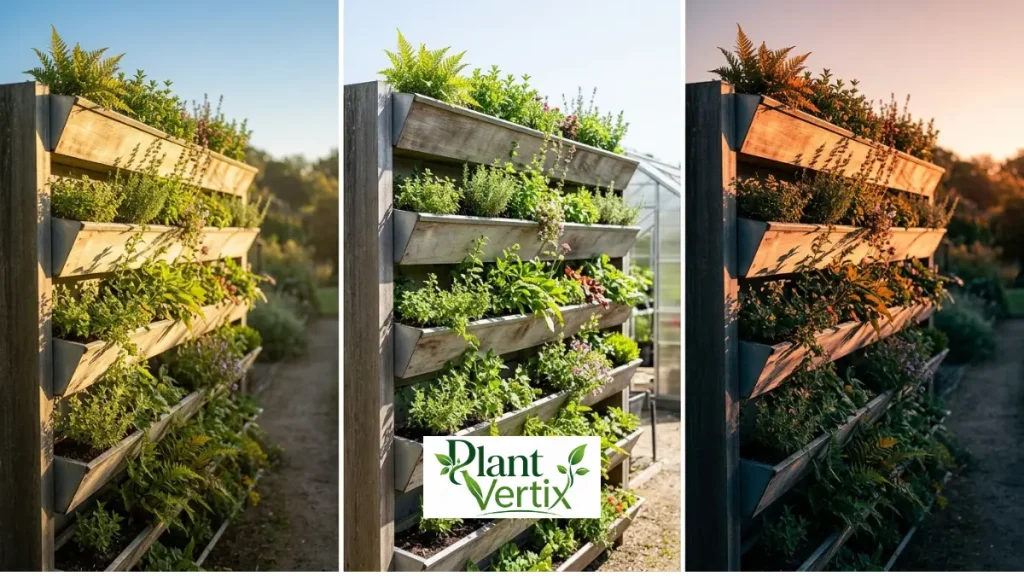
Most guides say “six to eight hours of sun,” which is a reasonable general target for fruiting and most vegetable crops, and it is not a useful instruction. The useful instruction is to go and look at your wall at three or four points across one clear day and note where the light actually lands, because walls are shaded by railings, neighboring buildings, roof overhangs and their own structure.
Then account for self-shading. A vertical structure shades itself. The top tier gets materially more direct sun than the bottom, and that gradient is a design input, not a defect. Plan your plant positions around it instead of discovering it in July. Our guide to choosing where to put a vertical garden covers how to read a wall properly.
Pass condition: you can describe, roughly, how many hours of direct sun the top of the structure gets and how many the bottom gets.
6. Confirm water access and where the runoff goes
Two questions. How does water get to the system, and where does it go when it leaves?
If you will hand-water, measure the walk from the tap. A watering can trip that takes two minutes will happen daily. One that takes ten minutes will not, in August, which is when it matters most. If you plan to use drip irrigation, confirm you have a hose connection or an outdoor tap within reach.
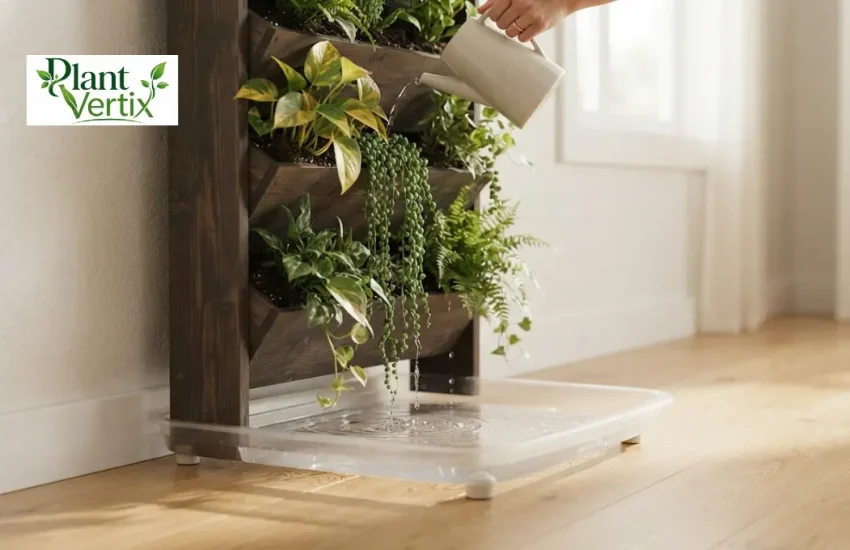
For runoff: outdoors, decide whether it lands somewhere that can take it, and whether it drips onto a neighbor’s balcony or a shared walkway. Indoors, you need a catch tray or reservoir, full stop, because there is no rain and there is also no drain. Watering a vertical garden explains why the top tier dries out while the bottom rots.
Pass condition: water in and water out both have an answer.
7. If there is a pump or a powered timer, plan the electrical supply properly
Any powered irrigation pump or timer near a wet growing system needs to be on an outdoor-rated circuit with residual current protection: an RCD in the UK and much of Europe, a GFCI outlet or breaker in North America. Use fittings rated for outdoor and wet locations, not an indoor extension lead run out through a window.
If you do not have a suitable outdoor circuit, an electrician installs one. This is not a corner to cut. Water and mains electricity in the same place is the one item on this list that can hurt you fastest.
Pass condition: any powered component runs on a protected, outdoor-rated supply, or there are no powered components.
8. Check that you can physically reach every part of it
Can you reach the top pocket to plant, water, prune and harvest, standing on the floor, without a ladder? Can you get behind or under the structure to check the wall and the fixings? A system you cannot inspect is a system that fails quietly.
Pass condition: every planting position is reachable, and the fixings are inspectable.
Part 3: System and Plants (Last, Not First)
9. Choose the system type against the constraints you just recorded
You now know your substrate, your measured load, your permission, your light gradient and your water access. Those five facts eliminate most system types for you automatically, which is a far better way to choose than browsing pictures. Our neutral comparison of vertical garden systems sets out the criteria without recommending a product.
Pass condition: you can say in one sentence why this system type and not the other four.
10. Match plants to tier position, not to the whole structure
A vertical garden is not one growing environment. It is several stacked on top of each other, differing in light, in how fast they dry, and in root depth available. Shallow pockets suit herbs, salad greens, strawberries and compact foliage plants. Deep-rooted and fruiting crops want a large container with a trellis above it, not a pocket. Assign plants by position, and put the things you harvest most often where your hand naturally reaches. Best plants for vertical gardening by tier breaks down position by position.
Pass condition: every plant is assigned to a specific position for a specific reason.
11. Write down the maintenance the design commits you to
Before you build, be honest about what the design demands: how often it needs water in peak summer, who waters it when you travel, when it needs feeding, and what happens to it in winter. A system that needs daily attention is fine if you are home daily. It is a slow failure if you are not.
Pass condition: you would say yes to that routine in writing.
12. Book a fixings inspection with yourself
Put a recurring reminder in your calendar to physically check the fixings, the frame and the wall behind the system, seasonally and after any storm. Cycling loads loosen things gradually. Nobody notices gradually.
Pass condition: the reminder exists.
The Four Stop Points, Collected
If you take nothing else from this checklist, take these.
- You cannot identify what is behind the surface (render, unverified cavity, hollow panel). Stop, get a professional.
- Anything hangs over a walkway, seating, a driveway, or where a child or pet plays. Stop, get a professional.
- The structure sits on a balcony, and you have not asked about floor loading. Stop, ask building management.
- A pump or timer has no protected, outdoor-rated supply. Stop, get an electrician.
Everything else on this list is a design decision. Those four are safety decisions, and they are the ones where a gardening article should hand you off rather than guess. We are not structural engineers, we are not electricians, and we are not your landlord’s lawyer.
Once the checklist is clean, the full build guide for a small space runs the actual construction in order.
FAQ
What should I check first when planning a vertical garden?
The surface, before anything else. Identify what the wall is made from and what is behind it, because the fixing is only as strong as its substrate, and plain drywall will not hold a loaded planter. Sunlight and plant choice matter, but they cannot rescue a wall that cannot carry the system.
How do I know how much my vertical garden will weigh?
Measure it rather than look it up. Fill one pocket or tier with the growing medium you will actually use, water it until it drains freely, weigh it on a bathroom scale, and multiply by the number of pockets, then add the frame. Published figures cannot know your medium or your system. Remember that water alone weighs about 8.34 pounds per US gallon, or one kilogram per liter.
Do I need permission to put a vertical garden on my balcony?
Often, yes, and it is worth checking before you spend anything. Leases commonly restrict drilling, and managed buildings frequently have rules about balcony alterations, railing attachments and anything visible from outside. The separate question of what the balcony floor can carry is one for your building management or a qualified engineer.
How much sun does a vertical garden need?
Six to eight hours of direct sun is a reasonable target for vegetables and most fruiting plants, with lower requirements for many foliage plants and shade-tolerant greens. The more useful step is to watch your specific surface across one clear day, because a vertical structure shades its own lower tiers, and the top and bottom of the same wall can be very different growing environments.
Can I install a vertical garden myself, or do I need a professional?
Many small, freestanding, and lightweight systems are straightforward DIY. Bring in a professional if the wall is rendered or has an unverified cavity, if the structure would hang above a walkway, seating area or anywhere a child or pet plays, if you are working on a rented or managed property, or if the system needs a powered pump and you have no outdoor-rated protected circuit.