Fabric Pocket Wall Planter: What It Does Well
A fabric pocket wall planter is the cheapest and lightest way to get a planted wall, and it is the highest-maintenance system per plant that you can choose. The reason is that one material property is doing two jobs at once. The felt breathes, so roots get air and never sit in a stagnant puddle, which is genuinely good for plants.
That same breathability means water evaporates through every face of a small root ball, so a fabric pocket dries faster than any rigid system holding the same volume of medium. If you can water daily in summer, fabric pockets are excellent value. If you cannot, they are the system most likely to kill your plants while you are away for a long weekend.
The second thing nobody mentions is structural, and it matters more than the drainage complaints that dominate the search results.
How a Fabric Pocket Wall Planter Actually Works
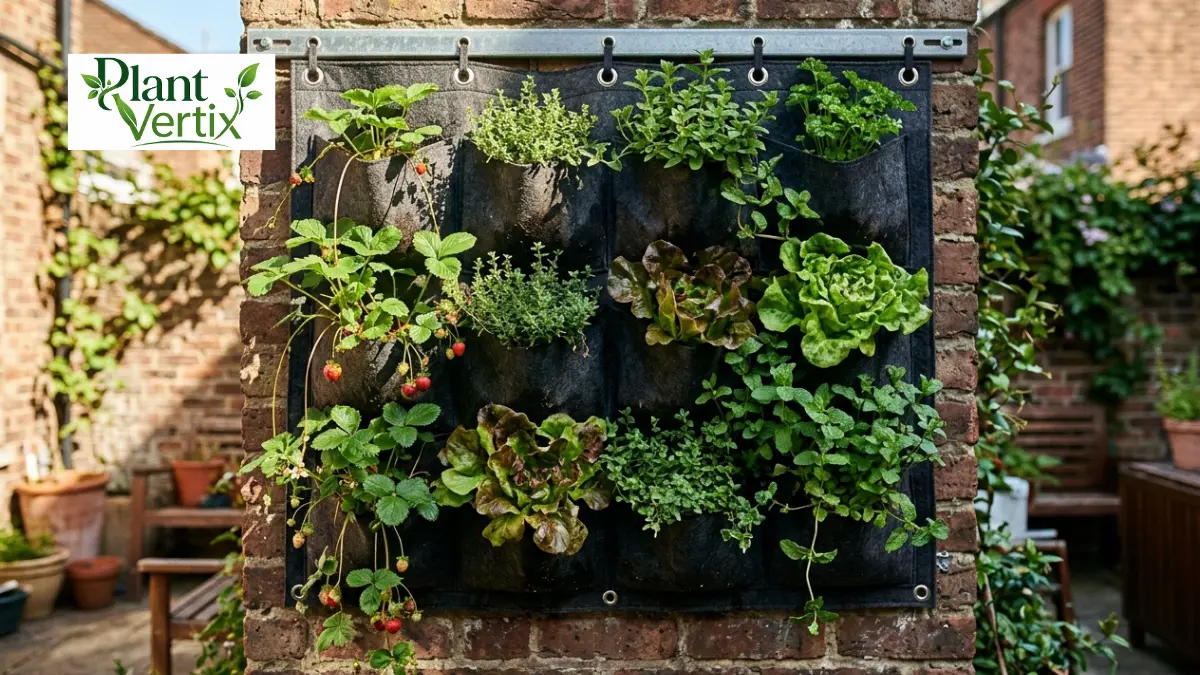
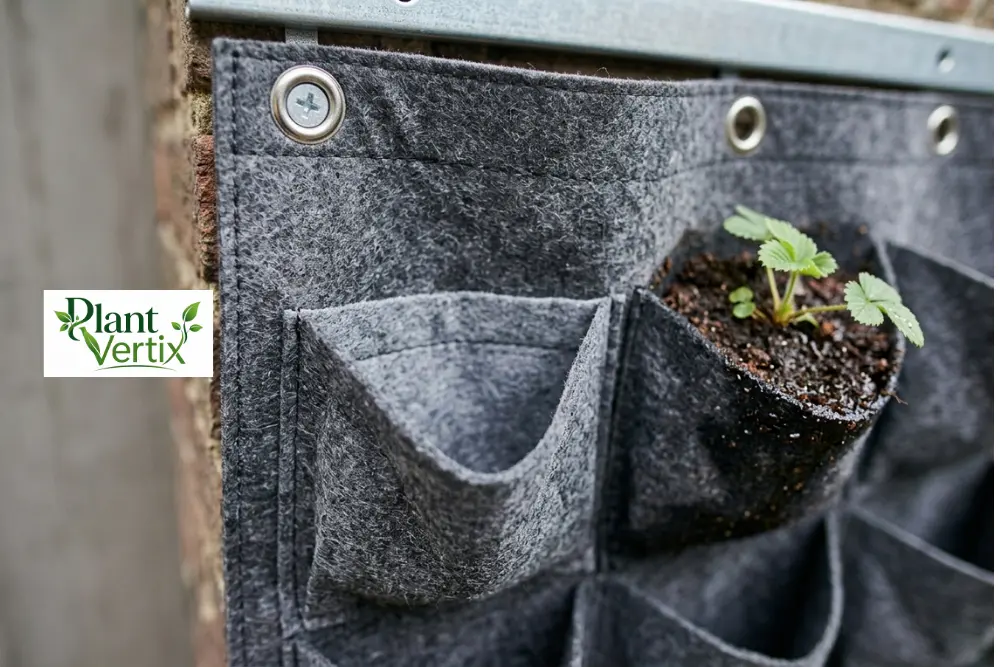
Strip away the marketing, and it is a sheet of thick non-woven felt or geotextile with sewn pockets across its face and fixing points, usually grommets or tabs, along the top edge. You fill each pocket with growing medium, plant into it, and water from the top so gravity carries moisture down through the panel.
Everything good and bad about these systems traces back to the fabric itself.
The fabric is porous. Air reaches the root zone through the sides of the pocket, not just the top. In horticulture, this produces a well-documented effect called air pruning: when a root tip reaches the fabric wall and meets dry air, it stops extending, and the plant branches behind it instead. The result is a denser, more fibrous root system rather than the coiled, circling roots that a plastic pot produces. This is a real advantage, and it is why fabric grow bags are popular with growers generally.
The fabric is a wick. Moisture moves through it by capillary action, sideways and downward, not only where you poured it. That is why a wet fabric panel is wet across its whole area and not just in the pockets.
The fabric is flexible. It has no rigidity of its own. Loaded, it hangs like a curtain, and every ounce in every pocket is transmitted upward through the sheet to the fixings at the top edge.
Those three properties explain the rest of this article.
What Fabric Pockets Do Genuinely Well
They weigh very little when empty, so a large fabric panel is a smaller structural imposition than a rigid system covering the same area. That is the honest reason they dominate the entry-level end of vertical gardening.
They drain freely, and they forgive overwatering. Root rot from waterlogging is difficult to achieve in a fabric pocket, because excess water leaves through the base and the sides. Compared with a sealed plastic pocket that has no drainage hole, this is a real safety margin for beginners.
They root well. Air pruning gives you a fibrous root ball that transplants easily and does not become pot-bound.
They install fast, and they come down fast. A panel that hangs off a rail or a few fixings can be taken down at the end of a season, or before you move out, without dismantling anything.
They conform to an irregular surface. A rigid panel needs a flat plane. A fabric sheet will hang against a slightly uneven wall or a fence perfectly happily.
They are cheap enough to experiment with. If you are not certain vertical growing suits your site, this is a low-commitment way to find out.
Where Fabric Pockets Fail
1. Drying out, which is not a fixable flaw
This is the big one, and most reviews frame it as a watering-schedule problem. It is a material property. A small volume of medium in a permeable container, mounted on a wall in moving air, loses water from five surfaces instead of one. In hot or windy weather, a fabric pocket can go from wet to bone dry inside a day.
You cannot solve it by watering more thoroughly, because the pocket does not hold more. You can only reduce it: choose deeper pockets, choose plants that tolerate drying, add a drip line, or position the panel out of direct wind. Lining a pocket with plastic is often suggested, and it does slow evaporation, but it also removes the drainage and aeration that were the point of the fabric, so you have converted it into a plastic pocket with a fabric jacket. That is a legitimate trade, made knowingly.
2. The load goes into the top edge, and the sheet sags
Here is the structural point that the product listings never make.
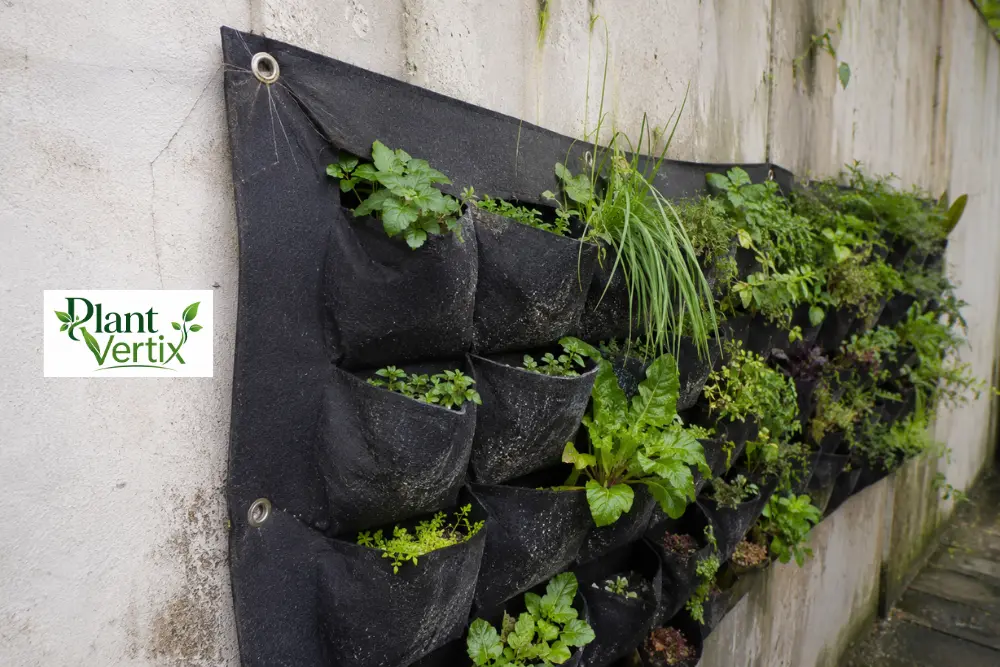
A rigid panel distributes weight across its own frame and into multiple fixings spread over its area. A flexible fabric sheet cannot distribute anything. Every filled pocket hangs off the fabric above it, and all of that weight arrives at the top row of grommets. The bottom pocket’s weight travels through the entire panel to the top fixings just as surely as the top pocket’s does.
Three consequences follow:
- The fixings at the top edge carry the whole system, wet, at its heaviest, all the time.
- The panel stretches and sags over a season. Non-woven fabric under a permanent load creeps. Pockets change shape, spacing shifts, and water starts running down the face rather than into the pockets.
- Load concentrates at each grommet. A grommet is a small hole in a sheet, and a sheet under tension tears from the hole outward. Panels are much better hung from a continuous rail or batten through all the fixing points than from two screws at the corners.
If you take one practical action from this article, make it that one: hang a fabric panel from a horizontal rail spanning its full width, fixed into something structural, rather than from a small number of individual points.
3. Moisture against the wall behind it
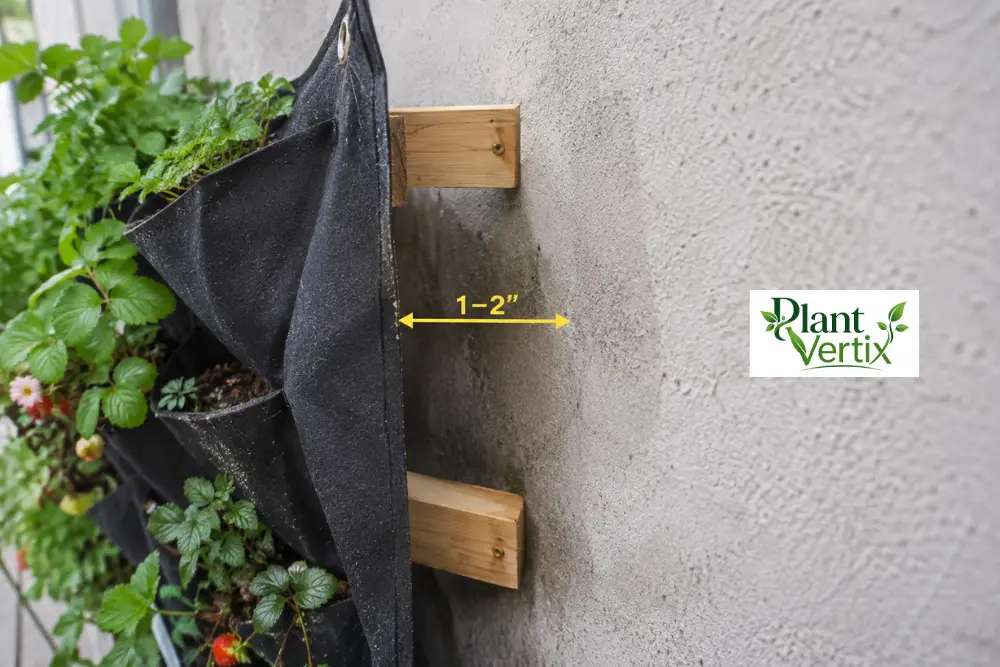
Fabric wicks. A wet fabric panel pressed flat against a wall keeps that wall damp continuously, and outdoor and indoor walls both dislike that. On painted plaster, you get staining and eventually blistering. On timber, you get rot. On masonry, you may get nothing at all for years, or you may get a persistent damp patch, depending on the wall.
The fix is an air gap. Mount the panel on battens or standoffs so air can circulate behind it, and add a waterproof barrier layer between the panel and the wall surface. Some panels are sold with a bonded waterproof backing, which helps and is not a substitute for the gap. Indoors, a barrier plus a catch tray is not optional, because there is no rain to dilute anything and no drain to take it away. Our guide to indoor vertical garden walls covers the indoor version of this problem in detail.
4. Fabric degrades in sunlight
Non-woven synthetics break down under ultraviolet light. Outdoors, in full sun, a fabric panel is on a clock. How long depends on the fabric, whether it is UV-stabilized, and how strong your sun is, so nobody can honestly quote you a lifespan. What you can do is inspect it: fabric that has gone stiff, chalky, or that tears easily when you pull a corner has lost strength, and it is holding a heavy wet load off a wall. Replace it rather than watch it.
5. Root depth is shallow, and that decides your plant list
Pockets are shallow by design. Herbs, salad greens, strawberries, small ferns, trailing foliage and compact ornamentals do well. Tomatoes, peppers, squash and root vegetables do not, and no amount of feeding changes the fact that the root run is not there. Best plants for vertical gardening by tier sets out what suits shallow positions.
What to Look At When Judging One
We do not recommend products or name brands on this site, and there are no affiliate links here. What follows is how to assess whatever is in front of you.
| Feature | What to look for | Why it matters |
|---|---|---|
| Fabric weight and density | Thick, dense felt rather than a thin sheet that light passes through | Thin fabric stretches, tears at grommets, and degrades faster |
| Pocket depth and volume | Deeper pockets, stated in dimensions rather than “large” | Depth is your entire drought buffer and root run |
| Fixing arrangement | A continuous top hem or a full row of reinforced grommets, not two corner tabs | Determines whether load spreads or concentrates |
| Reinforcement | Stitched and bound edges, doubled fabric at the hanging edge | This is where a loaded panel fails |
| UV stabilization | Stated explicitly for outdoor use | Unstabilized fabric will not last outdoors |
| Backing | Waterproof backing if the wall matters, plus your own air gap | Protects the wall behind |
| Pocket spacing | Room for a plant to fill out without crowding its neighbor | Crowded pockets stay wet at the leaf and dry at the root |
A pocket count is a marketing number, not a capacity number. Twenty small pockets have less growing volume than eight deep ones, and they need more watering.
Which Fabric Pockets Are Right for
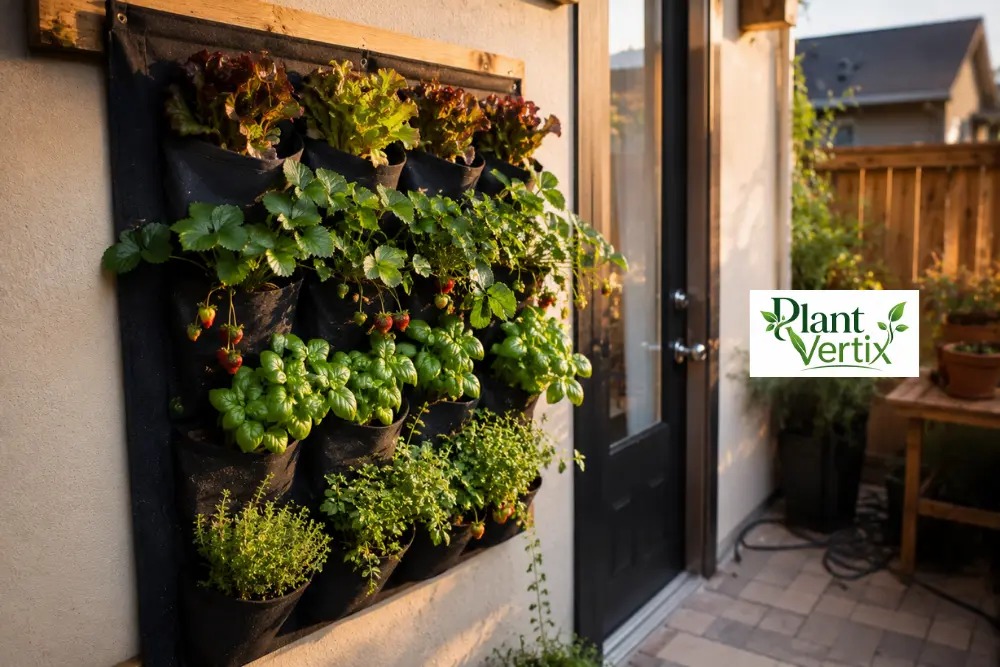
They are a good fit if you are testing whether vertical growing suits your site, you want herbs and salad within reach of a door, you are home most days in summer, you rent and want something removable, or your wall is uneven.
They are the wrong choice if you travel often in the growing season, your site is hot and windy, you want fruiting crops, you want a system that looks the same in five years as it does today, or the panel would hang somewhere a failure matters.
That last point deserves its own sentence. The fixing is only as strong as the material it goes into. Plain drywall will not hold a saturated planted panel. Studs, or a masonry anchor matched to your masonry, or nothing. This site publishes no safe-load figures, anchor ratings, or capacity numbers, because we cannot see your wall, and no manufacturer rates a fixing for an irrigated, cycling load. Weigh your own filled, drained panel on a bathroom scale, take that number to the fixing manufacturer’s guidance for your wall type, and if the panel would hang over a walkway, a seating area, or anywhere a child or a pet plays, get a qualified professional involved instead.
If fabric is not the answer, the alternatives are rigid modular panels, freestanding towers, tiered shelves and plain trellis. Our neutral comparison of vertical garden systems lays out the criteria side by side, and watering a vertical garden explains why the top of any panel dries before the bottom.
FAQ
Do fabric pocket wall planters cause damp or damage walls?
They can, because wet fabric held flat against a surface keeps that surface damp continuously. Mount the panel on battens or standoffs, so air circulates behind it, put a waterproof barrier between the panel and the wall, and indoors add a catch tray. A bonded waterproof backing helps but does not replace the air gap.
How often do fabric pocket planters need watering?
More often than not, any rigid system holds the same volume, because water evaporates through the fabric on every face. In hot or windy weather, that often means daily, sometimes more. Deeper pockets, drought-tolerant plants, drip irrigation and a sheltered position all reduce the frequency, but they do not eliminate the underlying material property.
Can you grow vegetables in a fabric pocket planter?
Leafy and shallow-rooted crops, yes: lettuce and other salad greens, herbs, strawberries and similar. Fruiting crops such as tomatoes, peppers and squash and any root vegetable need far more root depth than a pocket provides. Grow those in a large container with a trellis above them instead.
How long does a fabric wall planter last outdoors?
It depends on the fabric and your sun exposure, and no honest figure covers all products. Judge it by condition rather than by age: fabric that has gone stiff or chalky, that tears easily at a corner, or that has fraying grommets has lost strength and should be replaced, because it is holding a heavy wet load above the ground.
Should I line fabric pockets with plastic?
Only as a deliberate trade. A liner slows drying, which is the main complaint, but it also removes the drainage and aeration that make fabric worth using, and it makes overwatering possible. If you line, pierce the liner at the base so water can still escape, and accept that you now have a plastic pocket in a fabric jacket.