Why Gravity Makes Every Vertical System Uneven by Default
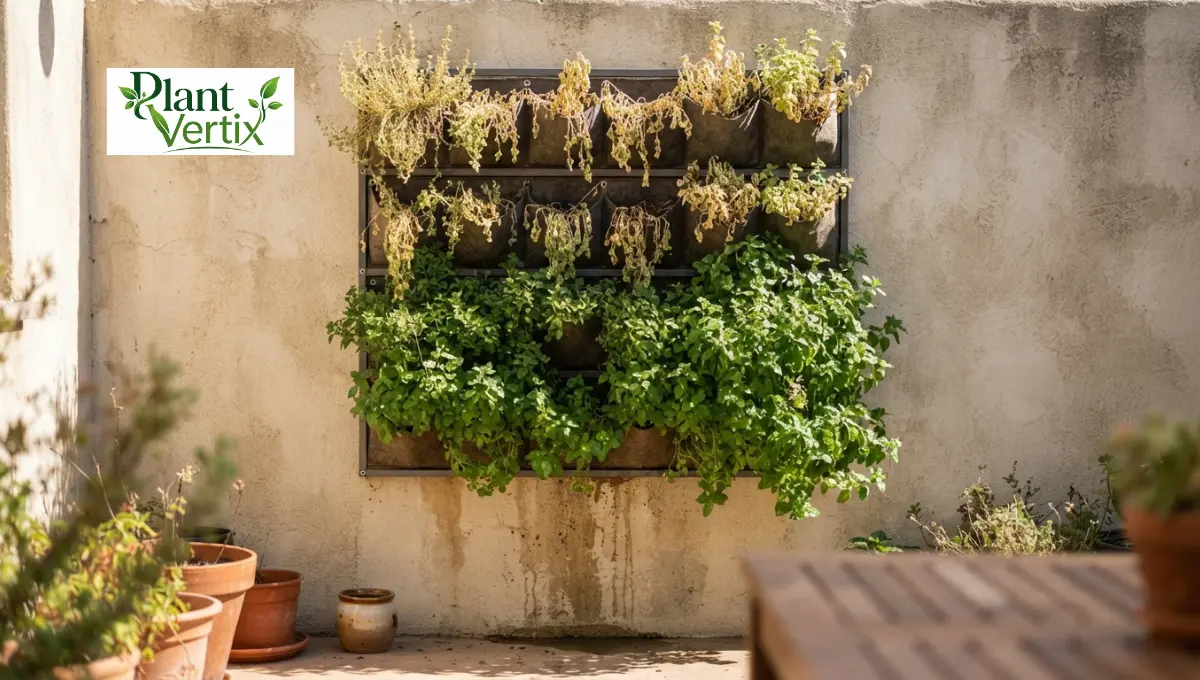
Your top row is crispy and your bottom row is rotting, at the same time, watered by the same person on the same day.
That is not a mistake you made. It is the default behavior of a vertical system, it happens to well-built systems as reliably as to bad ones, and there are four separate mechanisms producing it. They all push in the same direction, which is why the effect is so consistent and so hard to fix by changing your schedule.
The Four Mechanisms
1. Water runs down
The obvious one and the smallest part of the story.
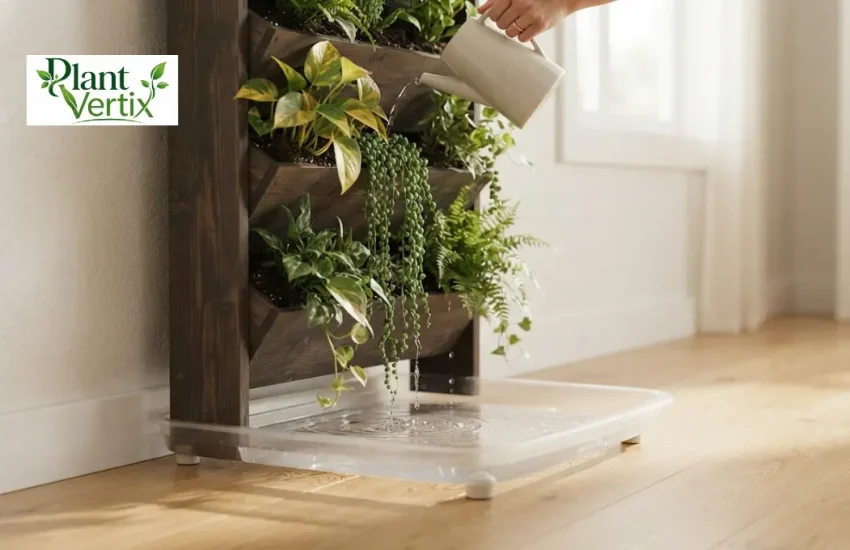
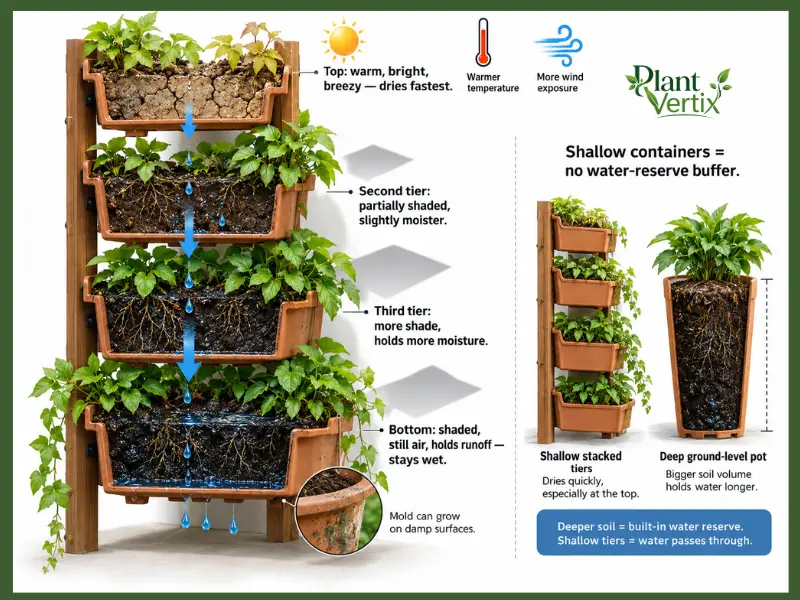
Water applied at the top does not stop at the top. It moves through the medium, out of the container, and into whatever is below, so the lower positions receive their own water plus everything that passed through the rows above.
In a system where tiers drain into each other, the bottom row is being watered several times per watering, and it is being watered with water that has already picked up salts and nutrients on the way down.
2. The top is in a drier microclimate
This is the mechanism people miss, and it is often the larger one.
Warm air rises. Air moves faster higher up, especially near a window, a door or outdoors. Light is usually more direct at the top of a structure and more obstructed at the bottom, both by the building and by the plants above.
So the top position is warmer, brighter, breezier and dries faster, before a single drop of water has been applied. Our article on choosing plants by tier position is built on exactly this: the same species in the same system dies differently depending on which row it is in.
3. The bottom is in shade, including shade you created
The lower tiers are shaded by the structure and by the plants above them, and that shade increases through the season as those plants grow.
Less light and less air movement mean slower drying, so the position receiving the most water is also the position losing it slowest. That is the compounding that turns a small imbalance into rot.
4. Vertical containers are shallow
Depth is a buffer. A deep pot holds a reservoir the plant draws down over days; a shallow pocket holds much less, so it swings between saturated and dry far faster.
Vertical systems are shallow by design, because depth is weight, and weight is the constraint the whole structure is built around. Our article on what a vertical garden actually weighs covers why that trade exists, and it explains why “just use deeper containers” is not the free fix it looks like.
Why Changing Your Schedule Does Not Solve it
Because the schedule is not the variable.
Water more and the bottom rots faster. Water less and the top dies faster. There is no frequency that serves both ends of a system where one position dries in a day and another stays wet for a week.
That is the trap, and it is why people cycle through watering routines for a season without improving anything. The imbalance is structural. A single watering decision applied to a structure with a gradient in it cannot produce an even result.
What Actually Fixes it
Four responses, roughly in order of how much they change.
Change what is planted where
The cheapest and most effective fix, and the one nobody in the SERP leads with.
Put the plants that tolerate drying at the top and the plants that tolerate damp at the bottom. You are not fighting the gradient, you are using it. The same structure that kills one arrangement is well suited to another.
This is the site’s central argument and it is worked through properly in our guide to choosing plants by tier position.
Water each zone separately
Stop watering the system and start watering three zones: top, middle, bottom. Check each one before you water it rather than applying the same amount everywhere.
That takes longer per session and it takes far less time than replacing dead plants twice a season. Our article on how to water a vertical garden sets out the routine.
Break the drainage chain
If your tiers currently drain into each other, the bottom row will always be over-watered.
Catch the runoff before it reaches the next tier, or design the tiers so each one drains to a channel rather than to the pocket below. This is a build decision more than a maintenance one, and it is the single biggest design difference between systems that work and systems that fight their owners.
Change the medium, not the schedule
A medium that holds more water suits the top. A more open, faster-draining medium suits the bottom. Using the same mix everywhere is convenient and it is another way the system is being treated as uniform when it is not.
Different pockets can have different mixes. Almost nobody does this and it is close to free.
How to Find Out Which Mechanism You Have
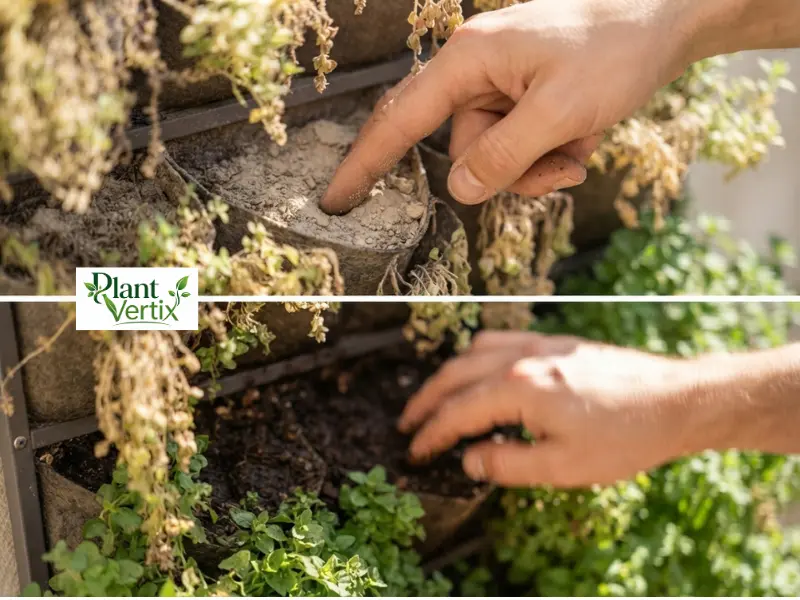
Ten minutes, and it tells you which of the four fixes to spend effort on.
Feel the medium in each tier, at the same time, a day after watering. Not the surface, an inch or two in.
Then feel them again three days later. What you are measuring is the rate of drying, not the moment.
A top that is dry after a day and a bottom that is still wet after three is a classic gradient and it wants zone watering plus a planting change.
A bottom that is permanently saturated points at the drainage chain rather than the schedule, and no watering change will fix it.
A top that dries in hours points at the microclimate: exposure, heat, air movement, or a container far too shallow for the plant in it.
And a system where everything is wet is a drainage problem rather than a gradient problem, which is a different article on this site.
FAQ
Why is my top row dry and my bottom row soggy on the same day?
Four mechanisms are pushing in the same direction. Water applied at the top passes through and waters the lower rows again, the top sits in a warmer, brighter, breezier microclimate that dries faster, the bottom is shaded by the structure and by the plants above it so it dries slowest, and vertical containers are shallow, which removes the buffer a deep pot would give you.
Will watering less often fix it?
No, because the schedule is not the variable. Water more and the bottom rots faster, water less and the top dies faster, and there is no single frequency that serves a structure where one position dries in a day and another stays wet for a week. The imbalance is structural, which is why people cycle through routines for a season without improving anything.
Can I just use deeper containers?
Not for free. Depth is a buffer against swings between saturated and dry, and it is also weight, which is the constraint the whole structure is built around. That trade is why vertical systems are shallow by design, and it is why deeper containers are a change to the structural question rather than a simple upgrade.
Should every pocket use the same growing medium?
It is convenient and it treats the system as uniform when it is not. A medium that holds more water suits the top, a more open and faster-draining one suits the bottom, and different pockets can carry different mixes. Almost nobody does this and it is close to free.
How do I tell which problem I actually have?
Feel the medium in each tier at the same time, an inch or two in rather than at the surface, a day after watering, then feel them again three days later, so you are measuring the rate of drying rather than a single moment. A dry top and a still-wet bottom is the classic gradient, a permanently saturated bottom points at tiers draining into each other, and a top that dries in hours points at the microclimate or a container far too shallow for the plant in it.
The Thing Worth Accepting
Some unevenness is permanent. A vertical structure has a gradient in it because it is vertical, and the goal is not to eliminate the gradient but to plant into it.
The systems that look effortless in photographs are not systems where the gradient was defeated. They are systems where the right plant went in the right row. That is a design decision made once, at the start, and our guides to planning a vertical garden and to where to put one are the places that decision belongs.