Upcycled Vertical Garden Ideas That Actually Work
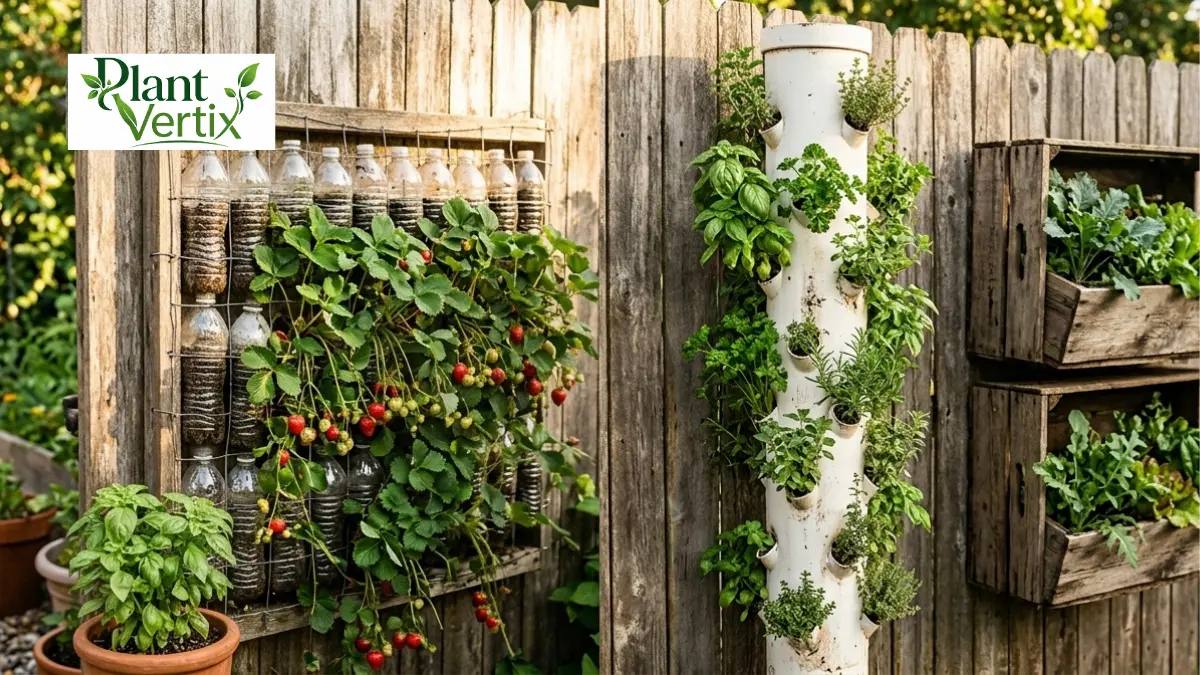
Yes, a genuine vertical garden can be built from things already sitting in a garage or a recycling bin, and four formats cover most of what works: plastic bottles cut and hung in a frame, PVC pipe drilled into a planting tower, stacked wooden crates, and a fabric shoe organizer hung flat against a wall or fence.
Each one is cheap and low-commitment, which makes upcycled builds a good way to test whether a vertical garden suits a space before spending on a manufactured system. The part most upcycled-garden roundups skip is which of these materials are unsuitable for growing food, not just how to assemble them, and that question matters as soon as anything edible goes into a repurposed container.
Plastic Bottle Planters
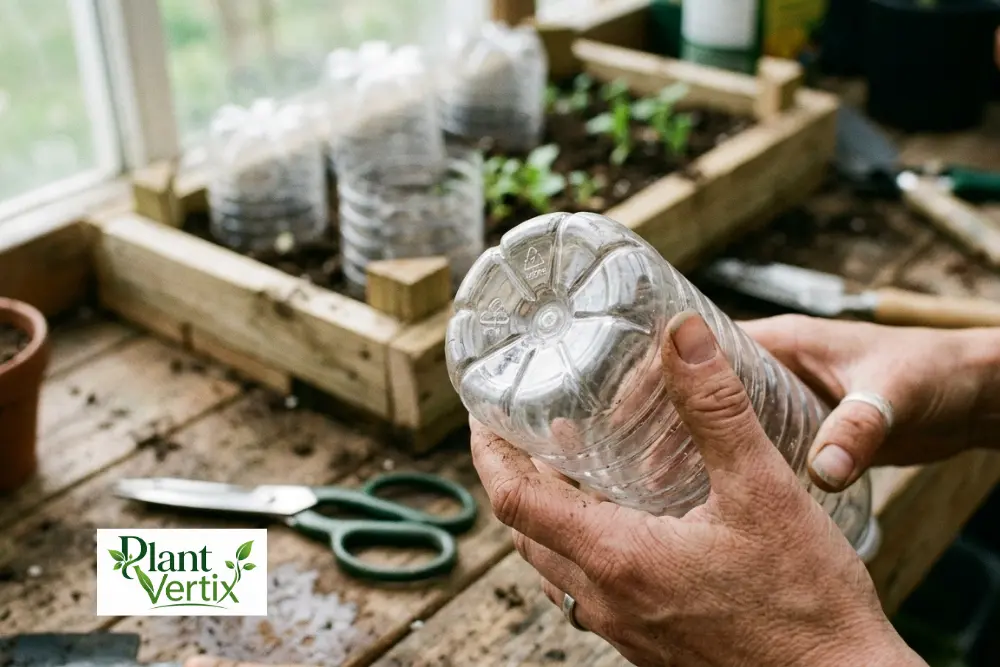
Cut a bottle in half horizontally, or cut an opening in the side, and it becomes a small planting cell that can be wired, zip-tied, or bolted to a wooden frame, a wire mesh panel, or a fence. Several bottles arranged in rows or a grid make a full vertical panel for herbs, strawberries, or trailing flowers.
What to check on the bottle itself. Most beverage bottles are made from PET (recycling code 1) or HDPE (recycling code 2), both generally considered acceptable for growing use once cleaned.
Avoid bottles with no visible recycling code, bottles that held anything other than food or drink, such as cleaning products, solvents, or pesticides, and anything you cannot confirm the original contents of. A container’s prior use matters more than its plastic type: a food-grade bottle that once held a chemical product can carry residue that soil and roots will sit against for months.
PVC Pipe Towers
Wide-diameter PVC pipe, drilled with a grid of planting holes and stood upright or mounted against a wall, is a popular strawberry and herb tower because it holds a surprising number of plants in a narrow footprint.
PVC specifically is one of the more debated choices for edibles. Standard PVC pipe (recycling code 3) is manufactured for plumbing and drainage, not food contact, and some gardening and food-safety guides recommend against it for anything you plan to eat, favouring HDPE (2), LDPE (4), or polypropylene (5) containers instead where a choice is available.
If you already have PVC pipe on hand and want to use it, growing ornamentals or cut flowers in it sidesteps the question entirely, or look specifically for pipe labelled food-grade or NSF-rated if the tower will grow anything edible.
Wooden Crates
Stacked crates, screwed together at the corners, make a tiered planter with real soil depth per level, better suited to larger plants than a bottle or pipe system.
The wood itself is the thing to check, not the crate shape. Older pressure-treated lumber made with chromated copper arsenate (CCA), a wood preservative containing arsenic, was in widespread residential use in the United States until manufacturers agreed to phase it out for those uses by the end of 2003, following an EPA-brokered agreement.
The EPA does not require removal of existing CCA-treated structures, but it also does not recommend the chemical for new food-contact or garden use, and unlabeled, older, weathered lumber of unknown origin is exactly the kind of material that the risk applies to.
If you are building crates from reclaimed shipping pallets, check the stamp: pallets marked HT are heat-treated and generally considered acceptable, while pallets marked MB were fumigated with methyl bromide and should not be used for anything growing food.
Shoe organizers
A fabric, over-the-door or wall-mounted shoe organizer, hung flat with its pockets facing out, turns into an instant grid of small planting cells, one plant per pocket. It is one of the fastest upcycled builds to set up and one of the easiest to get wrong on drainage.
Canvas and other woven fabric organizers drain better than solid vinyl or plastic ones. Cut a small slit or a few drainage holes in the base of each pocket before filling it, or water pools against the fabric and rots both the plant and the organiser. A vinyl-backed organizer needs deliberate drainage holes cut into every pocket, since the backing itself holds water instead of letting it pass.
Mount on a sunny wall or fence, and mount into a stud or solid framing behind the surface, the same rule that applies to any wall-fixed vertical system, since a fully soaked fabric grid loaded with a dozen small root balls carries real weight even though no single pocket looks heavy on its own.
Materials That Do Not Belong in an Edible Upcycled Garden
This is the section most upcycled-garden guides leave out, and it is the one that matters if anything you grow is going to be eaten.
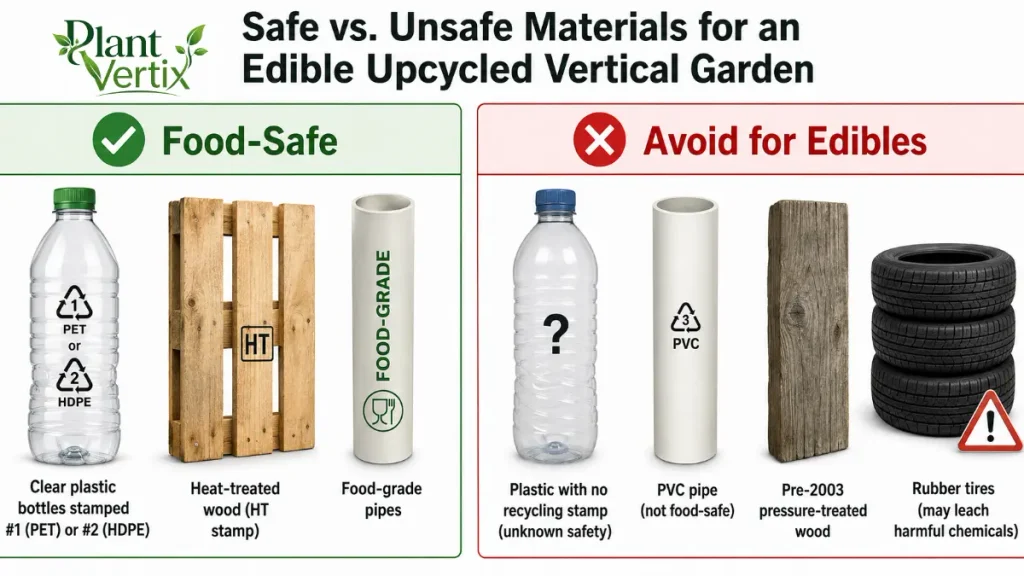
- Used tires. The debate on tire gardens is unsettled rather than resolved. Research summarised by McGill University’s Office for Science and Society notes that the chemicals of greatest concern in tires are not very water-soluble, so significant leaching into soil is considered unlikely, but it also notes there is little direct research testing vegetables actually grown in tires for contamination, and most sources conclude the sensible position is caution rather than confidence, given how many lower-risk container options exist.
- Pre-2003 pressure-treated wood of unknown history, for the CCA/arsenic reasons above.
- Pallets stamped MB (methyl bromide fumigated), as opposed to pallets stamped HT (heat-treated).
- Any container of unknown prior contents, regardless of its plastic type or material, since residue is the risk, not the container shape.
- PVC and polystyrene, where an alternative recycling code is available, and the container will grow something edible.
None of this rules out upcycling. It narrows the source pile to containers with a known, food-safe history, which is most of what ends up in a recycling bin or a garage anyway.
Mounting Still Matters, Even for a Light DIY Build
A bottle panel, a pipe tower, or a loaded shoe organizer still needs to be fixed to something, and the same rule applies as to any wall- or fence-mounted system: find solid framing (a stud, a fence rail, a joist) rather than trusting drywall, thin fencing, or trim alone.
Weigh one filled, watered cell or pocket on a bathroom scale and multiply by the total count before deciding how many fixing points a full panel needs.
For the criteria that apply across every mounted structure, see our comparison of vertical garden systems, and for plant-to-position matching once the structure is built, our guide to tier position by weight and light covers which plants suit a shallow upcycled cell versus a deeper crate.
If you are renting or sharing a wall or fence with a landlord or neighbor, confirm you can attach anything to it before drilling, the same rule that applies to a manufactured system as much as a DIY one, covered in our guide to where to put a vertical garden.
FAQ
Are plastic bottles safe for growing vegetables?
Bottles made from PET (recycling code 1) or HDPE (recycling code 2) are generally considered acceptable once thoroughly cleaned, provided you know they only ever held food or drink. A bottle of unknown prior use, or one marked with a code associated with lower food-safety ratings, is not worth the risk when a known-safe alternative is available.
Is it safe to grow food in a PVC pipe?
Standard plumbing-grade PVC is not manufactured for food contact, and several food-safety and gardening sources recommend against it for edibles where an alternative material is available. Ornamental or cut-flower use sidesteps the concern, or look for pipe specifically labelled food-grade if you want to grow something you plan to eat.
Can I use old wooden pallets for a vertical garden?
Check the stamp first. Pallets marked HT (heat-treated) are generally considered acceptable for garden builds. Pallets marked MB (methyl bromide fumigated) should not be used for anything growing food, and unstamped, unknown-history pallet wood is safest treated the same way.
Are tires safe to use as garden containers?
The evidence is genuinely unsettled. Research summarised by McGill University’s Office for Science and Society found the main chemicals of concern are unlikely to leach much into soil, but also found little direct testing of vegetables actually grown in them, and most sources land on caution rather than confidence, given the many lower-risk container alternatives available.
Do shoe organizer planters need drainage holes?
Yes. Canvas versions breathe and drain somewhat on their own, but still benefit from a few cut slits in the base of each pocket. Vinyl-backed organizers hold water against the fabric and need deliberate drainage holes cut into every pocket before planting, or the roots sit in standing water.