Over-the-Door Plant Hanger: A Zero-Damage System
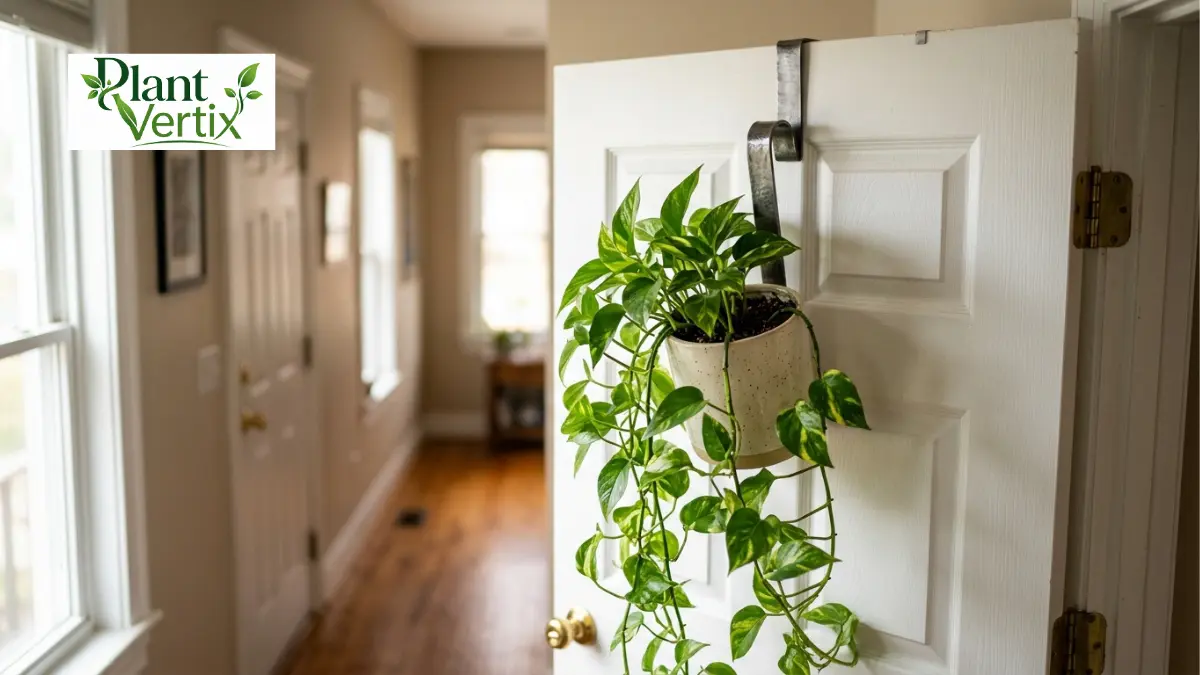
An over-the-door plant hanger is a shaped hook that fits over the top edge of a door; no drilling, no adhesive, nothing left behind when it comes off. A tension-rod system works differently: it wedges into place using spring pressure between two facing surfaces, like a shower-curtain rod.
Both leave the surface untouched, which makes them the default choice when a lease, a landlord, or your own preference rules out drilling entirely. The trade-off with both is capacity: an over-door hook is limited by what a door’s top edge and its hinges can take with repeated use, and a tension rod is limited by friction alone, so neither is built for the same weight a properly anchored wall bracket can carry.
How an over-the-door plant hanger actually works
The hook’s shape does the work: one arm sits flat against the front of the door, the other against the back, and the weight of whatever hangs from it rests on the door’s top edge. That means the load is not going into the wall, the frame, or a fixing point at all; it is going onto the door itself, as a static point load right at the top edge.
This matters because the door is not a fixed structure; it is a moving one. Every time the door opens or closes, the hook and everything hanging from it moves too, and the hook has to reseat itself on the top edge each time. A coat rack hook designed for occasional use handles this fine. A hanging planter left in place for months, on a door that gets opened and closed daily, is a different pattern of repeated small impacts on the same spot, which is worth knowing before you pick the door.
What the weight actually rests on: the door and its hinges
An over-door hook does not touch the door frame or the wall, so drilling concerns do not apply to it the way they do to a wall-mounted system. What does matter is the door itself:
- Hollow-core interior doors, the lightweight standard in most apartments and newer homes, are strong enough across their flat face but have relatively little solid material at the top edge where the hook sits. A heavy planter concentrated right at that edge is a more demanding load than the same weight spread across a flat wall panel.
- Solid-core or exterior doors have more material at the top edge and generally tolerate a hook better, though weight still ultimately transfers through the door’s hinges every time it swings.
- The hinges carry the combined weight of the door and anything hanging from it, every time the door moves. A door that already swings, sags, or does not latch cleanly is a sign the hinges are working near their limit before a plant hanger adds anything.
None of this means an over-door hanger is unsafe for typical use; light to moderate planters on a normal interior door are exactly what these products are designed for. It means the honest ceiling is lower than a wall-mounted bracket, and a heavy, mature plant with a large root ball belongs on a floor-standing structure instead, as covered in our comparison of vertical garden systems.
Tension-rod systems: pressure, not a fixing
A tension rod wedges between two surfaces, most often the inside of a window frame, a shower alcove, or two facing walls in a narrow space, using an internal spring to push outward against both sides. It holds through friction alone, with nothing screwed, hooked, or glued anywhere.
That mechanism is also its limit. Friction that holds a light curtain rod is not the same friction that holds a fully loaded, saturated planter, particularly one with any horizontal reach that adds leverage against the rod’s grip. Tension-rod systems suit herbs, small trailing houseplants, and light hanging pots well, and are not the right choice for anything heavy enough that a slip would matter. Check a tension rod’s own stated capacity where the manufacturer publishes one, and treat it as a ceiling to stay under, the same rule that applies to any weight rating on any system.
Compounding weight: more than one hanger on the same door
A single hook is one thing. Several hangers stacked or spread across the same door multiply the load the top edge and hinges are carrying at once, and it is easy to add a second or third planter over time without re-checking that the door still swings and latches normally.
If a door starts sticking, dragging, or failing to latch after you have added hanging weight to it, that is the door telling you it is carrying more than it should, and it is worth removing weight rather than forcing the door to compensate.
Where these systems fit best
A low-traffic door is the better choice over a frequently used one. A closet door, a spare-room door, or a pantry door that opens a few times a day sees far less repeated impact at the hook’s seating point than a bedroom or bathroom door in constant use. This is the detail almost no over-door hanger listing mentions, and it is the single easiest way to get more life out of the hardware.
Light, trailing plants suit both systems well: pothos, string of pearls, small ferns, and herbs in lightweight pots. A large, heavy plant in a substantial pot does not suit either system, regardless of what a hook or rod’s packaging states it can carry, since the honest ceiling for both is well below what a properly anchored wall bracket handles. For a heavier plant, a freestanding tower or a tiered plant shelf puts the weight on the floor instead, with no door or fixing involved at all.
When to check with a landlord or building manager
Neither system involves drilling, so most leases that restrict wall modifications do not apply here. Two situations are still worth a quick check first: a shared or common-area door, which is not yours to hang anything from regardless of the method, and a door that already shows wear, sagging, or hinge problems before you add anything to it.
Since that is a maintenance issue for whoever is responsible for the door, not something to work around with a hook. If your specific lease has unusual language about doors or fixtures, it is worth a quick read before committing either system to a door you plan to use for months.
For the wider decision between drilling and not drilling, our neutral framework for vertical garden systems sets out the criteria across every structure type, and our tiered hanging planter guide covers the equivalent weight questions for a ceiling-mounted hanging system, if a door is not the right fit for your space.
FAQ
How much weight can an over-the-door plant hanger hold?
It depends on the specific hook and the door it hangs from, so check the product’s own stated capacity rather than assuming a general figure, and treat that number as a ceiling, not a target. A hollow-core interior door has less material at the top edge to bear a concentrated load than a solid-core or exterior door.
Will an over-the-door hanger damage the door?
Used within the product’s intended weight range on a door in good condition, typically no lasting damage occurs. Overloading it, stacking several hangers on one door, or leaving it long-term on a door already showing hinge wear increases the chance of the door sticking, sagging, or failing to latch properly.
Is a tension rod strong enough for a hanging planter?
For light plants in lightweight pots, generally yes. Tension rods hold through friction alone, which is a lower capacity than a hook resting on a door edge or a bracket anchored into a stud, so they are best suited to herbs, small trailing plants, and anything you would be comfortable seeing slip if the rod’s grip were ever exceeded.
Can I hang more than one plant from the same door?
You can, but the combined weight and the door’s hinges are what actually carry it, not the hooks individually. If the door starts dragging or fails to latch cleanly after adding weight, that is a sign to remove some of it rather than add more.
Which door should I choose for an over-the-door plant hanger?
A low-traffic door, a closet, a spare room, or a pantry sees far less repeated opening and closing than a bedroom or bathroom door in daily use, which means less wear at the point where the hook seats. Choosing a solid-core door over a hollow-core one, where you have the choice, also gives the hook more material to rest against.