When Not to Build a Vertical Garden (Honest Reasons)
A vertical garden is the wrong call when your lease does not permit the fixing it needs, when the wall behind it must stay dry, when the spot is a west-facing heat trap that will outpace your watering, when nobody in the household will realistically keep up with it, or when the upkeep is likely to outlast your enthusiasm for it.
None of those are failures of the idea. They are honest mismatches between a specific structure and a specific situation, and every one of them is cheaper to notice now than after you have drilled, planted, and filled it.
Almost every guide to vertical gardening opens with how to build one. This is the article that comes first, because talking a reader out of a bad build is worth more than selling them a good one they should not have started.
If Your Lease Does Not Allow the Fixing, Stop Here
Read the actual lease clause, not what you assume it says. Some leases distinguish between picture-hook-scale holes and anything load-bearing. Some prohibit exterior alterations to balconies and railings outright, including anything mounted or clamped to them.
Some say nothing at all, which is its own answer: ask in writing before you drill, because holes from fixings are commonly treated as damage rather than normal wear and tear at move-out, and the specifics vary by lease and by landlord. This site is not a landlord-tenant lawyer. If the honest answer is “I don’t know what my lease allows,” that is the actual next step, not the drill.
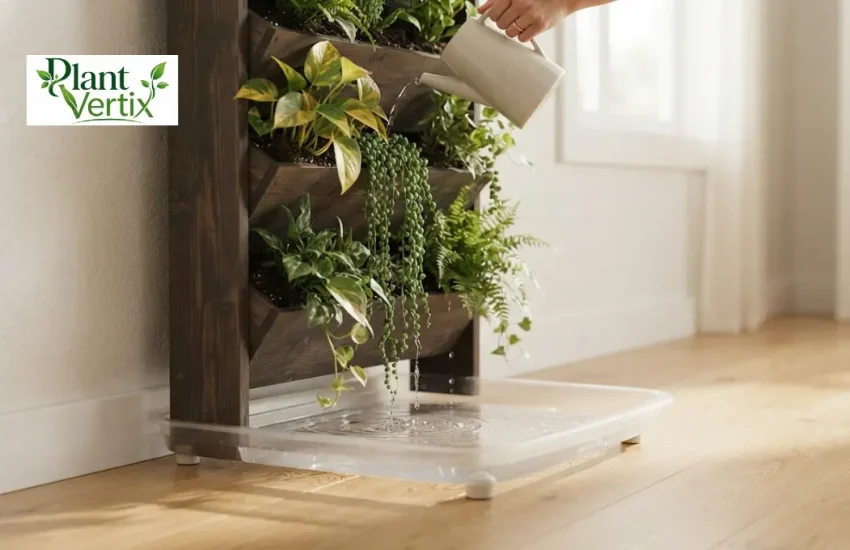
If drilling is out entirely, that does not rule out vertical growing. It rules out wall-mounted and permanently fixed structures specifically. Freestanding towers, tension-braced frames, and railing-clipped planters that clamp rather than fix are the categories that remain, and vertical garden systems compared walks through which of those actually suit a no-drill situation.
If the Wall Must Stay Dry, This is the Wrong Wall
Some walls are a bad fit regardless of what the lease says. A finished interior wall with drywall, paint, or wallpaper directly behind a planted structure is sitting next to something that will be watered on a schedule for years. Even a well-drained system produces some humidity and occasional splash at the point of contact, and a wall with no barrier and no air gap behind the structure is absorbing that over time.
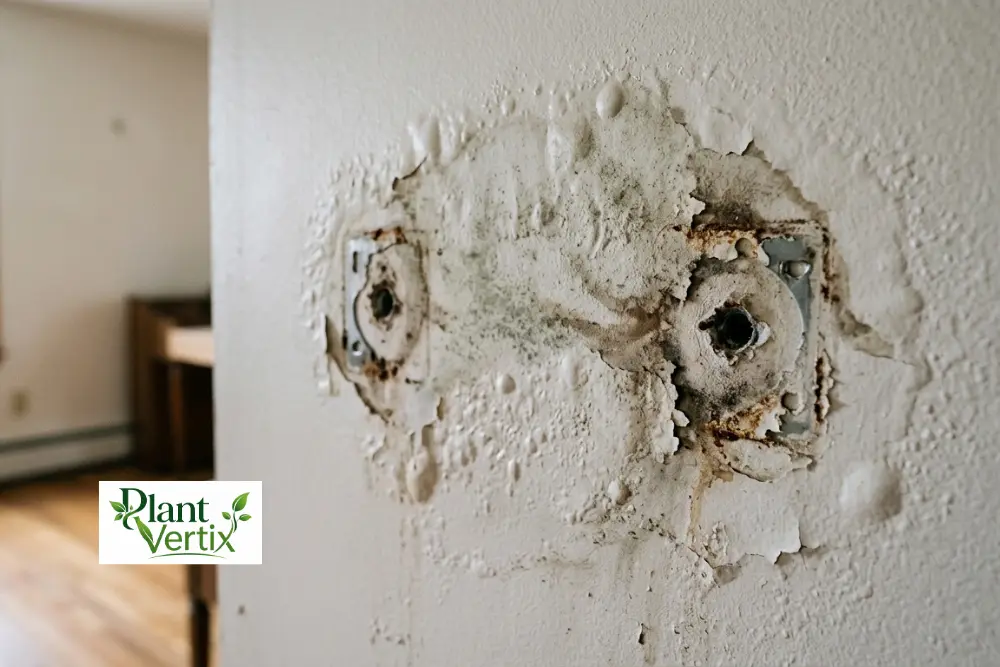
Two years in, that stops being a gardening question and becomes a repair. A vertical garden on an interior wall covers what a proper barrier and standoff actually require, and if you are not prepared to build that in, the honest answer is to keep the structure off that wall, not to skip the barrier.
West-Facing Heat Traps: When More Light Becomes a Liability
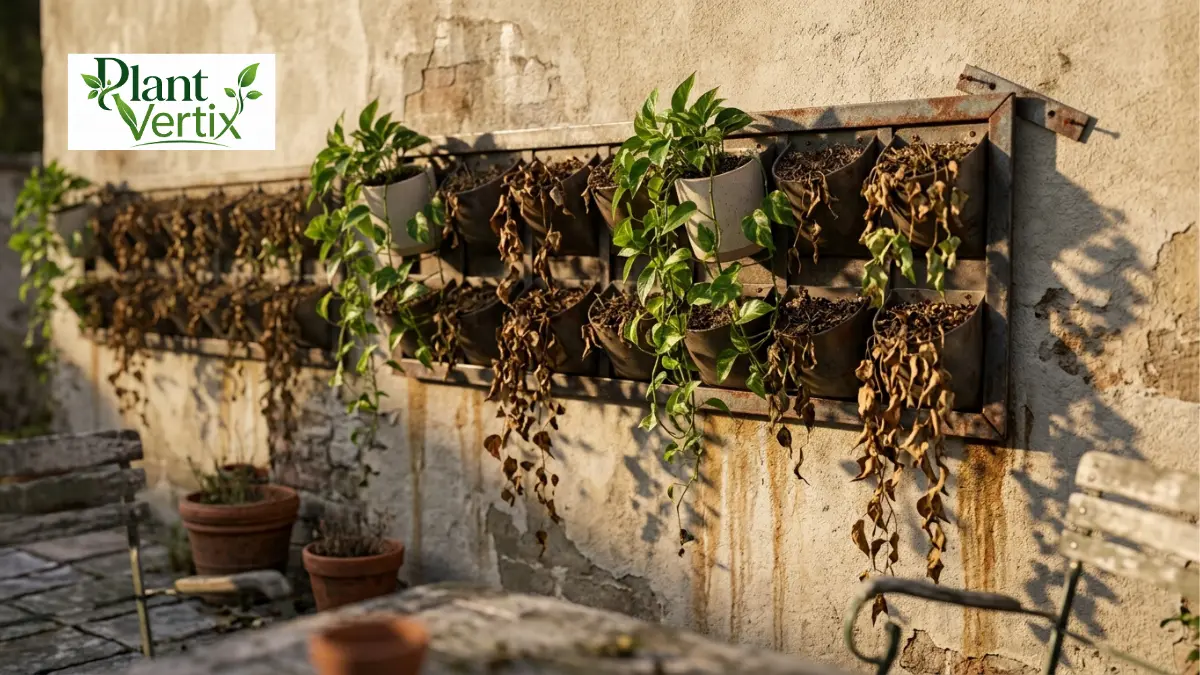
A west-facing wall in full sun for several hours a day is not automatically a bad growing spot, but a planted vertical structure there dries out faster than the same plants in the ground, because a shallow root zone spread across a thin panel or pocket system has far less buffer than garden soil. Pair that with reflected heat off a wall, a balcony rail, or paving, and the drying accelerates further.
If you are not able to water more than once a day during the hottest stretch of summer, or to install a reliable automated system, a west-facing wall in a hot climate is a demanding spot to start with, not a beginner one. Where to put a vertical garden covers siting in more general terms; this is the specific case where “more sun” stops being the advantage it sounds like.
If Nobody Will Realistically Water it
This sounds obvious until it is the actual reason a build fails. Vertical structures dry faster and more unevenly than a pot on the ground, because gravity pulls water through them and because the surface area exposed to air is larger relative to the volume of growing medium.
That means a vertical garden generally asks for more frequent, more careful attention than the equivalent plants in a bed or a single large pot, not less. If watering already competes with a demanding schedule, frequent travel, or a household where nobody has claimed the job, a vertical structure is choosing the highest-maintenance version of a hobby that already has a lower-maintenance option available.
When the Maintenance Load Outlives the Enthusiasm
The build itself is the easy, motivated part. What follows is a season, then several seasons, of watering, trimming, replacing plants that did not survive their tier, checking fixings, and eventually taking the whole thing apart and repairing the wall behind it.
Vertical garden mistakes covers what happens when that maintenance gets skipped mid-build. This section is about the honest version of the same question asked before you start: is this a project you expect to still be tending in two years, or a weekend enthusiasm that is more likely to become an unwatered eyesore by the second month. Neither answer is wrong. It is only a mismatch if you build the high-maintenance version while expecting the low-maintenance outcome.
A Five-Minute Check Before You Buy Anything
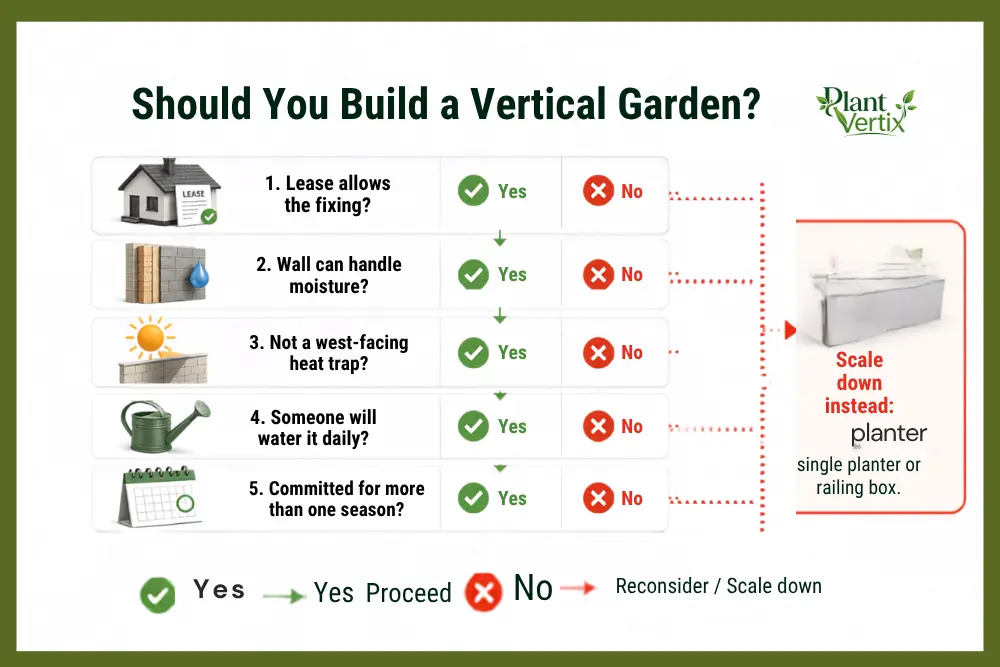
| If this is true for you | The honest verdict |
|---|---|
| I have not read my lease’s fixing or alteration clause | Read it, or ask, before anything else |
| The wall behind my planned spot must stay dry and finished | Build somewhere else, or plan a real barrier and standoff first |
| The spot gets several hours of hot, direct afternoon sun and I cannot water daily in summer | Choose a different wall, or plan for automated watering |
| Nobody has actually agreed to water this | Solve that first, structure second |
| I want the look more than I want the ongoing task | A smaller, single planter gets the look without the commitment |
If you clear that table honestly and the answer is still yes, the build sequence that puts the wall and the load question first, instead of last, is in how to build a vertical garden for a small space. If any row gave you pause, that pause is the useful part.
What to Build Instead
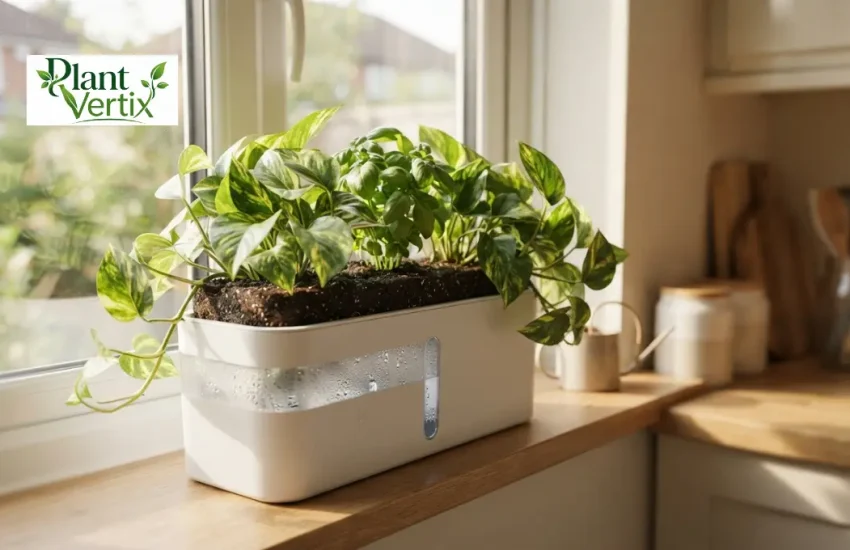
None of the reasons above rule out growing more in a small space, only the specific commitment of a mounted, planted structure. A single well-chosen floor-standing planter, a small balcony railing planter clipped rather than drilled, or a couple of large pots on a plant stand deliver most of the visual effect with a fraction of the maintenance and none of the wall question. Scaling down is not a consolation prize. It is the version that actually gets watered.
Frequently Asked Questions
What is the biggest reason vertical gardens fail?
Underwatering from underestimating how fast a vertical structure dries out, and structures started on a wall or lease that was never actually checked first. Both are avoidable with a few minutes of honest assessment before buying anything.
Is a vertical garden a bad idea for renters?
Not automatically, but drilling without checking the lease is a real risk, and a no-drill structure (freestanding, tension-braced, or clip-mounted) removes that risk entirely if the lease is unclear or restrictive.
Can a vertical garden damage my wall even if I never drill?
Yes, sustained moisture against a finished wall with no barrier or air gap can cause damage over time, independent of any mounting holes. That is a siting and barrier question, not a drilling question.
How do I know if I have time to maintain one?
Be honest about your current watering habits with the plants you already own. A vertical structure generally needs more frequent attention than a floor-standing pot, not less, because it dries faster and less evenly.