Tension-Braced Frames That Touch Nothing Permanently
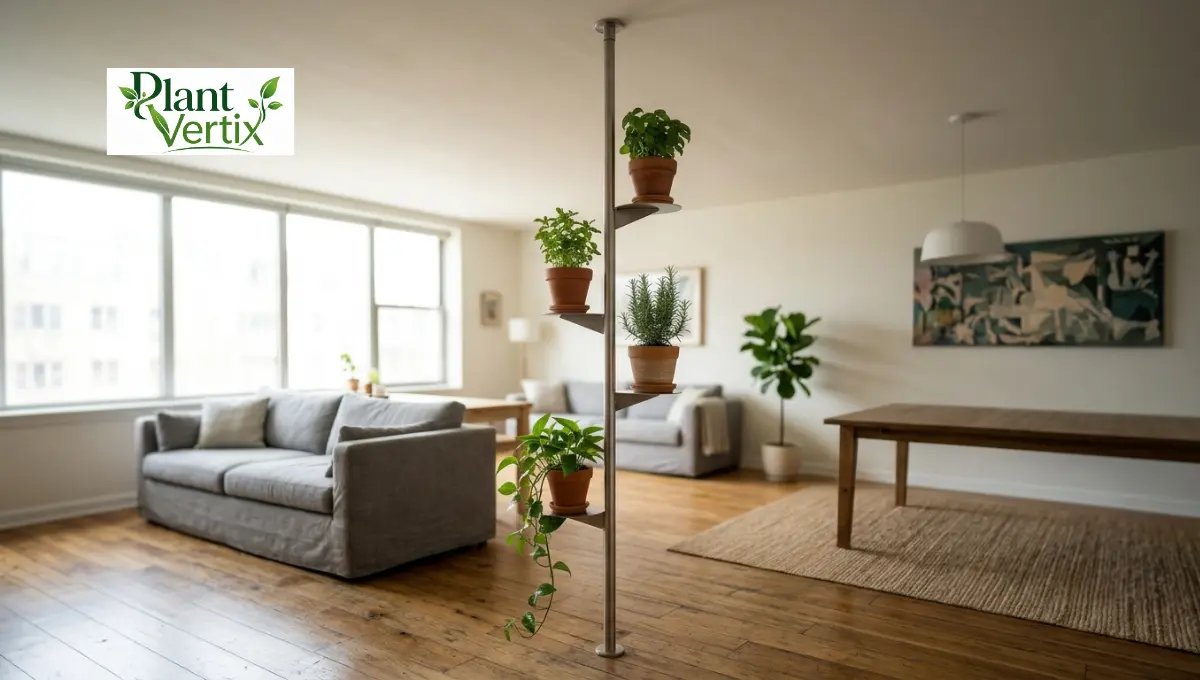
A tension frame is a pole or a rack held in place by pressure, usually between floor and ceiling, sometimes between two facing walls. Nothing is drilled, nothing is glued, and when you leave you take it with you.
For a renter it is one of the better answers in this whole subject, and it is worth understanding what it is actually doing, because the failure mode is different from everything else in the no-drill list.
Where the Load Goes, Which is the Whole Point
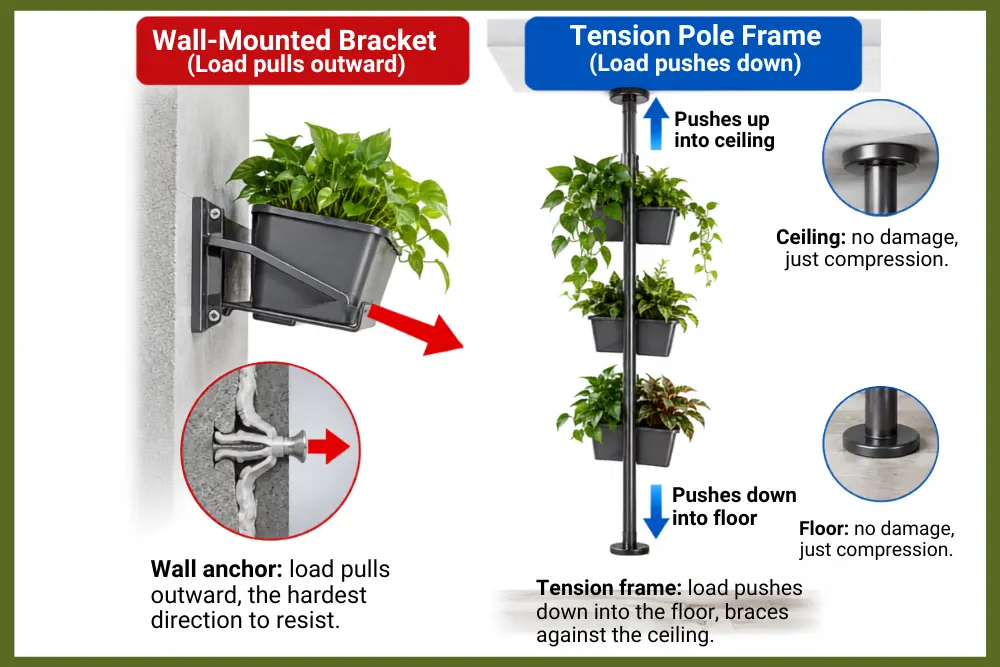
A frame anchored into a wall pulls outward on that wall. That is the hardest kind of load for a wall to resist, and it is why anchor choice matters so much in a fixed installation.
A tension frame pushes. Its weight goes down into the floor, and its stability comes from pressure against the ceiling. The floor is carrying the load, which is what floors are designed to do, and the ceiling is being pushed on rather than hung from.
That is a genuinely better arrangement for a growing system, and it is the reason this method sits near the top of the list in our guide to renter-friendly options rather than near the bottom with adhesive mounts.
The Two Questions That Decide Whether it Works
1. Is the ceiling suitable?
This is the one people do not ask, and it is the one that matters.
A tension frame applies continuous upward pressure to whatever is above it. That is fine against a solid, sound ceiling and it is a different proposition against a suspended ceiling tile, a thin lath-and-plaster ceiling, or a panel that is not attached to anything structural.
Manufacturers of tension systems state what they are intended for, and reading that before buying is the whole of the safety work available to you here. If the product’s own instructions exclude your ceiling type, that is your answer.
In a rented flat you may not know what your ceiling is. Building management or the landlord does, and that is a reasonable question to ask.
2. Is the floor sound and level?
A tension frame that is not vertical is not exerting pressure where it thinks it is. Uneven floors, thick carpet, floating floors and floors that flex all change how the system sits.
Carpet is the quiet one. A pole tensioned on carpet compresses the pile, and the tension it started with is not the tension it has a week later. Anything relying on pressure needs re-checking, which brings us to the maintenance question.
What Makes a Growing Load Different
Everything on this site keeps returning to the same fact and this row is no exception.
A planted system gets heavier every time you water it. Our article on what a vertical garden actually weighs sets out why the structure’s rated capacity and the building’s capacity are two separate questions, and our piece on how much wet potting mix weighs covers why the multiplier between dry and saturated is not something anyone reliably publishes.
For a tension frame this matters in two ways.
The vertical load changes. The frame is carrying more after watering than before it, and the tension setting was made at one of those two states.
Water gets on things. A tension frame is usually metal, in a permanently humid microclimate, with water running down it. Corrosion at the foot and at the ceiling contact point is a slow failure and it is the one you will not notice.
The Failure Mode, Described Plainly

A tension frame does not usually let go all at once. It loses tension gradually, slips a little, and then reaches a point where it is no longer bracing anything and is simply a tall object leaning in a room.
That is a better failure mode than an adhesive mount releasing without warning, and it is only better if somebody notices the gradual part.
So the honest maintenance requirement is a check. Push it, gently, in the direction it would fall. Look at the ceiling contact for a mark or a depression. Look at the foot for movement. Do that when you water, once a week, rather than never.
Designing a System That Suits the Method
Every no-drill method has a lower ceiling than a fixed installation, and the productive response is to build lighter rather than to test the limit.
Keep the heaviest containers low. A tension frame with the weight at the top is a lever, and the geometry works against you at exactly the point where the ceiling contact matters most.
Fewer and shallower containers. Depth is volume and volume is weight when saturated. Our piece on how many plants a vertical garden can hold is the planning version of this arithmetic.
No reservoir if you can avoid one. Water is the heaviest single component in most systems and it is a static, permanent addition rather than a temporary one.
A lighter growing medium, chosen deliberately.
And nothing above where a person, an animal or something breakable sits. That is a design decision rather than a safety calculation, and it is one you can make without knowing any numbers.
Where a Tension Frame Beats a Freestanding Shelf
Both put the load into the floor, so the choice between them is about footprint and stability.
A tension frame takes up less floor area for the same growing height, because it does not need a wide base to stay upright.
A freestanding shelf does not depend on the ceiling, which makes it the better choice where the ceiling is unsuitable or unknown. Our guides to tiered plant shelves and freestanding towers cover those.
A tension frame is easier to remove and leaves less trace, which is the renter’s whole reason for being here.
Two Things to Check Before Buying
What the manufacturer says it is for. Growing systems, or clothes rails, or shower curtains. A product rated for one thing is not automatically suitable for a wetter, heavier, permanently loaded application.
Whether it can be re-tensioned easily. A design that requires dismantling to adjust is a design that will not get adjusted.
FAQ
Will a tension pole frame work with a suspended or lath-and-plaster ceiling?
Often not, and the manufacturer of the frame is the one who says so. A tension system presses continuously upward, which is a different proposition against a suspended tile, thin lath and plaster, or a panel that is not attached to anything structural. If the product’s own instructions exclude your ceiling type, that is your answer, and if you do not know what your ceiling is, building management or the landlord does.
Can I set one up on carpet?
You can, and it needs watching. A pole tensioned on carpet compresses the pile, so the tension it started with is not the tension it has a week later. The same applies to floating floors, uneven floors and floors that flex, because a frame that is not vertical is not pressing where it thinks it is.
How often should I check the tension?
Make it part of watering, so roughly once a week. Push the frame gently in the direction it would fall, look at the ceiling contact for a mark or a depression, and look at the foot for movement. A tension frame usually loses tension gradually rather than letting go at once, and that gentler failure mode only helps if somebody notices the gradual part.
Is a tension frame better than a freestanding shelf?
They put the load in the same place, the floor, so the choice is about footprint and dependence. A tension frame takes less floor area for the same height because it does not need a wide base, while a freestanding shelf does not depend on the ceiling at all, which makes it the better choice where the ceiling is unsuitable or unknown.
Does anything need to change about the planting itself?
Yes. Keep the heaviest containers low, because weight at the top turns the frame into a lever. Use fewer and shallower containers, choose the growing medium deliberately, skip a reservoir where you can, and do not put the structure above a spot where a person, an animal or something breakable sits.
Where This Article Stops
It does not tell you what your ceiling, your floor or any frame will carry, and it publishes no number you could treat as permission. Those questions belong to the manufacturer of the frame, to building management, to your landlord, or to a qualified professional.
What it does is make the load path visible, so that when you ask them, you are asking about the right thing: a growing weight, pressed between two surfaces, in a room where the moisture never quite goes away.