Vertical Garden Mistakes, Ranked by What They Cost
The vertical garden mistakes worth worrying about are not the common ones; they are the expensive ones. Sort every mistake by how much it costs to undo. A wrong plant costs a weekend. A wrong watering habit costs a season. A wrong structure costs the build. Mounting into a wall that cannot carry it, or leaving no barrier behind a damp structure, costs somebody else’s building.
Every mistake list ranking for this query orders its items by how often the error happens. Frequency is the wrong axis when you are three days from drilling.
Rank Your Mistakes by How Much They Cost to Undo
You do not need an inventory of everything that can go wrong. You need to know where to slow down. Most vertical gardening errors are cheap; a few are not, and a flat numbered list hides the difference.
Here is the ranking I use. The rest of this article works through it in order.
| Tier | What it costs | Typical mistakes | Undone by |
|---|---|---|---|
| 1 | A weekend | Wrong plant, wrong tier, root ball too big for the pocket | Pulling it out |
| 2 | A season | Watering routine, no cut-back, one plant smothering the rest | A changed habit, and time |
| 3 | The build | Structure bought before the wall was assessed, wrong material, no drainage | Money, and starting over |
| 4 | Not yours to undo | Mounting into an unassessed wall, no moisture barrier, unpermitted drilling | Somebody else, at your expense |
Tiers 1 and 2 are gardening. Tiers 3 and 4 are construction and tenancy, which is why this site starts with the wall rather than the structure.
Tier 1: Mistakes That Cost a Weekend
These are the errors every article warns you about, and they matter least, because you can undo them.
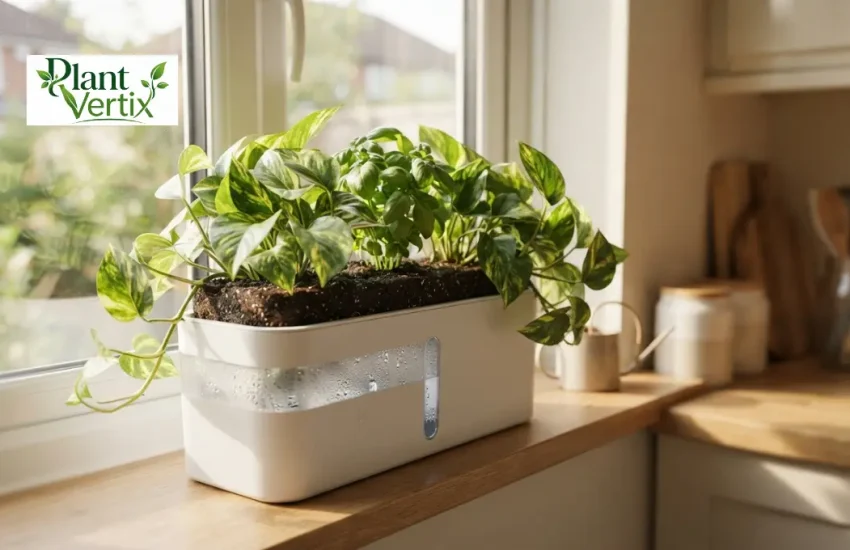
The wrong plant. A deep-rooted plant in a shallow pocket planter will struggle, however well you water it. Pocket depth is a hard constraint. Shallow-rooted foliage, trailing plants, herbs and small ferns fit inside it. Large tropicals do not.
The wrong tier. A vertical structure creates a light gradient and a moisture gradient at once. The top takes the most light and dries first. The bottom takes the least and stays the wettest. A sun-lover at the bottom and a shade-tolerant plant on top is the classic error.
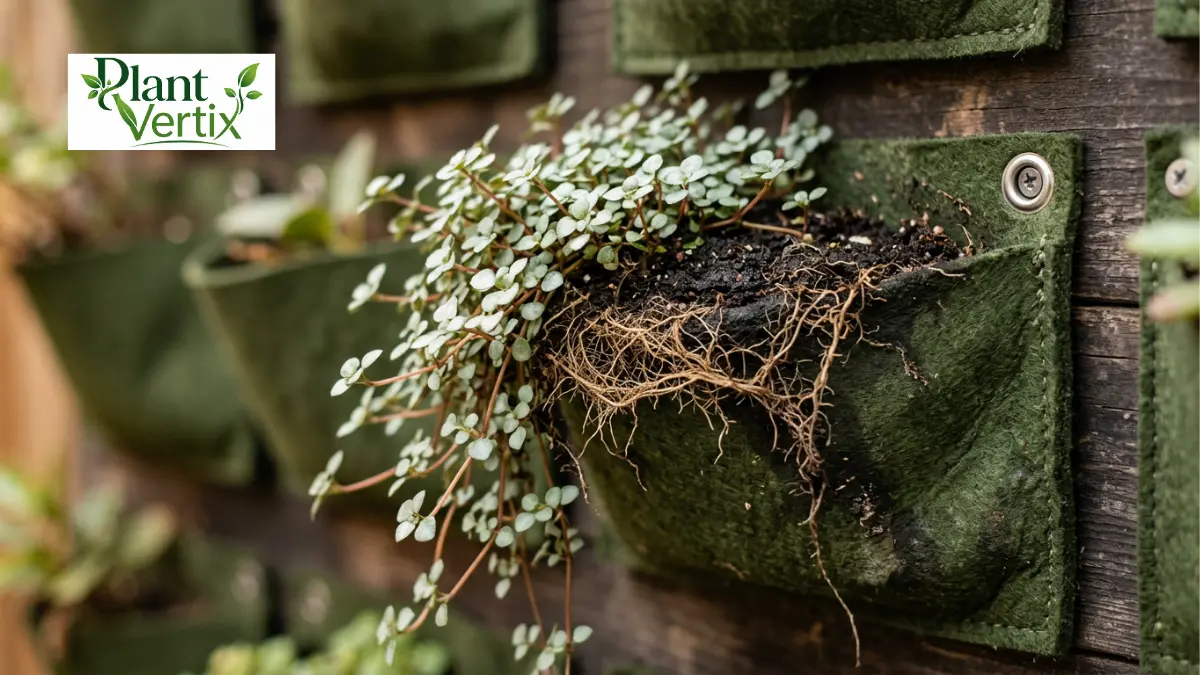
Medium packed to the rim, so water sheets off the surface instead of soaking in.
Each is fixed in an afternoon with a trowel, and none can hurt anything but the plant.
Tier 2: Mistakes That Cost a Season
These take longer to appear and longer to correct because you are correcting a habit rather than an object.
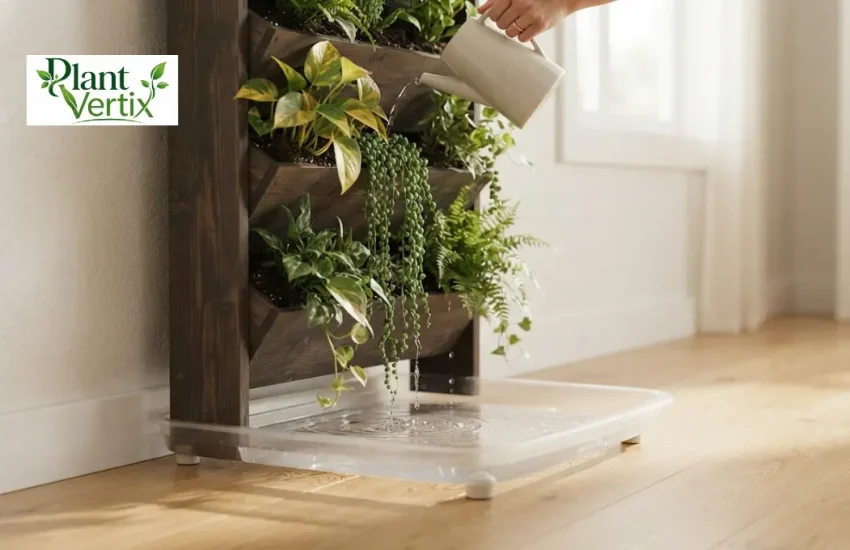
Watering a tall structure the way you water pots. Gravity does not treat the tiers equally. Water applied at the top passes through the upper pockets and accumulates below, so the top runs dry and the bottom stays wet. People answer the dry top by watering more, which drowns the bottom. Root rot at the base and crisping at the top of the same structure is the signature. Drip irrigation on a timer fixes it, and so does watering each tier separately. Either way, you are retraining yourself over weeks.
Assuming a planted structure maintains itself. Vigorous plants smother their neighbors, and trailing growth shades the tier below, so one unchecked grower can take a panel in a season.
Letting airflow collapse. Dense, still growth flat against a wall invites fungal problems such as powdery mildew.
Tier 3: Mistakes That Cost You the Build
Now money is involved. These are the mistakes you cannot fix without dismantling something you already paid for.
Buying the structure before assessing the wall, railing or floor. The big one is covered below.
Choosing a material that will not survive the exposure. Untreated softwood against a permanently damp medium rots from the inside. Thin plastic in full sun goes brittle and cracks, usually at the mounting points. Material is not an aesthetic question. It is a question about what will still be holding weight in three years.
Designing no drainage path. Outdoors, that means too few drainage holes and a saturated medium. Indoors, it means runoff with nowhere to go, which is worse.
Leaving no maintenance access. If you have to move furniture to water it, you will not water it. Reading the wall first is the subject of where to put a vertical garden.
Tier 4: Mistakes That Are Not Yours to Undo
This is the tier the ranking pages skate over, and the only one where the damage lands on somebody other than you.
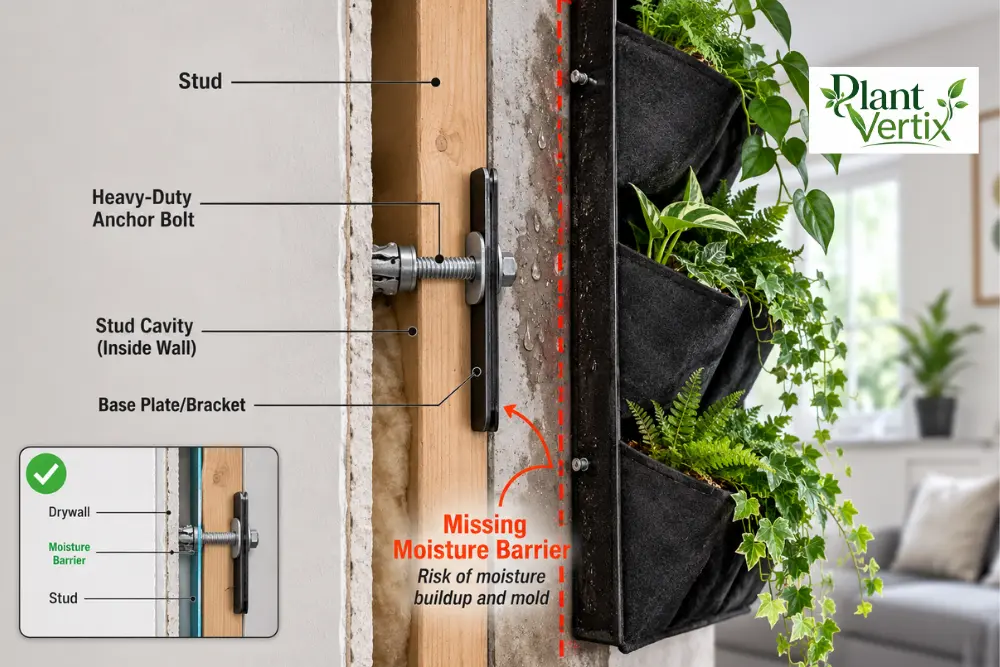
Mounting into a wall whose construction you never established. Drywall, plaster over masonry, a timber-framed cavity and solid block are four different problems, and a planted structure gets heavier every time you water it. This site publishes no safe-load figures, no anchor ratings and no capacity numbers, because a rating printed on a fixing describes a dry, static load, and a planted structure is neither. Beyond a couple of light pots, that question belongs with a qualified professional who can see your wall.
No barrier behind a damp structure on a finished wall. Two years of moisture against paint, plaster or wallpaper stops being a gardening problem, and by the time it is visible, it is a repair. The indoor version is worked through in a vertical garden on an interior wall.
Drilling was not permitted. Check the lease before the drill comes out. Holes from fixings are commonly treated as damage rather than normal wear and tear, and the specifics vary by lease. I am not a landlord-tenant lawyer, so ask your landlord or building management in writing.
Loading something never designed to carry a garden. A fence panel and a balcony railing both look sturdier than they are, which is why vertical gardening on a fence and balcony vertical gardening are handled separately.
The Root Cause: Nearly all of it is a Planning-order Mistake
Here is what I did not expect when I laid these failures next to each other. Most Tier 3 and Tier 4 items are not separate errors. They are one error, seen at four different moments.
That error is choosing the structure first.
Buy a specific structure, and you have already decided its weight, its mounting method, its material, its drainage behavior and its footprint on the wall. Every later question becomes a negotiation with an object you already own. So you drill where the structure needs holes rather than where the wall can take them, and you skip the barrier because the panel sits flush.
Reverse the order, and four mistakes disappear at once. Establish what the wall, railing or floor actually is, whether you may fix into it, and where the water goes. Then choose a structure that satisfies those answers. That sequence is not harder, only less fun.
“Too Many Plants at Once” is a Weight and Airflow Mistake First
Every list includes overcrowding, and every list frames it horticulturally: competition for light and nutrients, disease risk, plants that never fill out. All true, and all of it is Tier 2.
What belongs in Tiers 3 and 4 is this. A fully planted structure is the heaviest version of itself, and it reaches that weight on the day you fill it rather than gradually. Plant every pocket at once, and you have loaded the mounting to its maximum before you have any evidence about how the fixings, the frame or the wall behave when everything is wet. Staged planting is a load test with a slow ramp.
Airflow is the other half. Dense growth with no gap behind it traps humid air against a surface that never dries. Underplant slightly, keep the standoff, and let it fill in over a season.
About the Percentages You Will See Quoted
The pages ranking for this query claim, variously, that a vertical planting dries out 20 to 30 percent faster than ground planting, that it dries out about 40 percent faster, and that a structure triples in weight once saturated. They do not agree, and not one of them attributes its figure to a study, a manufacturer’s test or any named source.
So I am not repeating them as fact. The direction is real, and you can confirm it in a week. If you need a real number for a real wall, weigh your own filled planter on a bathroom scale straight after watering and give that figure to whoever is advising you on the fixing.
The Five Checks That Prevent the Expensive Tiers
Run these before you spend anything.
- What is the wall, railing or floor made of, and what is behind the surface? If you cannot answer, you are not ready to choose a structure.
- Are you allowed to fix it? Lease, landlord, building management, in that order. Renting is a constraint, not a barrier.
- Where does the water go, and what happens the day something clogs? Point at the place. If you cannot point at it, the design is not finished.
- Can you reach every part of it, including behind it? Watering, trimming, inspecting.
- Will the material still be holding weight in three years? Not looking good. Holding weight.
Clear those five, and the expensive tiers are gone. The full build sequence, in the order that keeps the load question first, is in how to build a vertical garden for a small space.
Frequently Asked Questions
What is the most common vertical garden mistake?
Uneven watering across the tiers, because gravity dries the top while the bottom stays saturated. The costliest mistake is different: choosing a structure before establishing what the wall, railing or floor can carry.
Can a vertical garden damage a wall?
It can, and the usual cause is sustained moisture rather than weight. A waterproof barrier, an air gap, a catch point for runoff and the ability to take the structure down and inspect behind it are what prevent it.
How many plantsares too many for a vertical garden?
Enough to be full at maturity, not on day one. Filling every pocket immediately loads the mounting to its maximum before you have seen how the fixings and frame behave, and it removes airflow.
Is it a mistake to build a vertical garden if I rent?
No, but drilling without checking your lease is. Holes from fixings are often treated as tenant damage rather than normal wear and tear, so ask your landlord or building management first.